Blue Lagoon
Vodka, blue curaçao and lemon, topped with soda — a vividly blue, citrus-bright highball built as much for looks as for flavour.
- Difficulty
- easy
- Prep time
- 4 min
- Strength
- 12% ABV
- Glassware
- Highball glass
- Base
- vodka
- Serves
- 1
Ingredients
- Vodka50ml
- Blue curaçao25ml
- Fresh lemon juice20ml
- Soda water100ml
To top
Garnish: Orange slice, Maraschino cherry
Method
- Fill a highball glass with ice.
- Add the vodka, blue curaçao and lemon juice.
- Stir briefly to combine and to see the colour develop.
- Top with cold soda water.
- Garnish with an orange slice and a maraschino cherry.
Equipment
Don't have everything? Here's what works instead.
Jigger
Household swap: A tablespoon measure (1 tbsp ≈ 15ml).
Citrus juicer
Household swap: Squeeze the lemon by hand, straining out the pips.
Missing an ingredient?
Each swap below says what it changes and how to correct for it, so you can decide whether you are making this drink or a neighbouring one.
Instead of Blue Curaçao
Best substitute: Triple Sec
This is the colour in this drink.
Flavour impact: Loses the signature blue colour but keeps a very similar orange-citrus flavour — effectively a clear version of the same drink.
What changes
Expect more intensity and more strength. Still a good drink, and a slightly different one.
- Intensity ↑
- A more intensely flavoured ingredient will start to dominate the components around it.
- Strength ↑
- Triple Sec is 30% ABV against 20%. A stronger bottle raises the alcohol in the finished drink and, with it, the perceived dryness and heat.
- Character
- Both are orange, sweet and clean, and you lose vivid, and you gain citrusy. Numbers can't see this: two ingredients can be identically sour and still smell nothing alike.
To correct for it
- Scale it back by a third and let the other ingredients hold their share.
- Pour a little less, or add slightly more dilution, to land where the recipe intended.
High confidenceBoth are orange curaçao-style liqueurs that differ mainly in colour, not core flavour.Shifts the drink
Make it better
- Blue curaçao is sweeter than it looks — balance it with proper fresh lemon juice rather than skipping the citrus.
- Build in a clear glass to show off the colour — it's a big part of the drink's appeal.
- Stir gently once the soda is added so you don't lose the fizz.
- Add the carbonated mixer last, after shaking or stirring the rest, and pour gently to keep as much fizz as possible.
- Adjust sweetness gradually and taste as you go — it's easy to add more syrup, impossible to take it out.
Rescue this drink
- Too sweet
- Add a touch more lemon juice, or reduce the blue curaçao to 20ml next time.
- Colour looks murky rather than bright blue
- Use a clear glass and fresh, clear soda water — cloudy ice or juice with pulp can dull the colour.
- Too sour
- Top with a little more soda water to soften the citrus edge.
- Tastes flat
- Use freshly opened soda water and add it last, just before serving.
- It separates in the glassgeneral guidance
- A built drink with several ingredients relies on the pour to mix it, and denser components — syrups, purées, juice concentrates — sink. Give it one full stir from the bottom up with a bar spoon before garnishing. If it separates again while standing, it wants building over more ice rather than more stirring.
- Too weak or waterygeneral guidance
- Add a splash more of the base spirit rather than extra mixer. For stirred or built drinks, over-dilution from ice is the usual cause — try a shorter stir or fewer, larger ice cubes.
- Served too warmgeneral guidance
- Chill the glass, ice and every ingredient ahead of time — a warm pour is the fastest way to lose a cold drink's balance. For one serving, there's no real fix beyond rebuilding it properly chilled; for a batch, keep everything refrigerated until the moment of serving and add ice last.
Make ahead & storage
Batch the base, finish at serving
Batch the 2 stable components days ahead and add fresh lemon juice and soda water when you pour.
- Fresh lemon juice:
- Fresh citrus loses its aroma within hours and turns dull. Squeeze it on the day.
- Soda water:
- Carbonated — it goes flat in a bottle, and there is no way to put the fizz back.
What it tastes like
The taste, and what drives it
sweet, balanced, very light, sparkling — a long and lengthened drink served long, over ice.
Sweet
Dry → Sweet
Openly sweet, and balanced by something else rather than hidden.
What drives it: Blue curaçao — carries the most sugar into the glass.
Balanced
Soft → Sharp
Enough acidity to keep the drink awake without dominating it.
What drives it: Fresh lemon juice — supplies the acidity.
Very light
Light → Rich
Almost weightless in the mouth — closer to a long soft drink than to a sipper.
No single ingredient accounts for this — it comes from the combination rather than from one bottle.
Very sparkling
Still → Sparkling
Carbonated, which lifts the aromatics and makes the drink taste drier than its sugar content alone would suggest.
What drives it: Soda water — carries the carbonation.
Moderate
Delicate → Bold
Moderate: assertive enough to hold its own, mild enough for a second.
What drives it: Vodka — is the most concentrated thing in the glass.
What you smell first
- Citrus peelLeads
From Blue curaçao, Fresh lemon juice, Orange slice
Every aroma here comes from the liquid itself; nothing is layered on top.
How it was worked out
Each reading comes from the recipe's own recorded taste scores combined with what each ingredient contributes, weighted by how much of it is in the glass. Almost everything in this drink has detailed ingredient data behind it.
How balance actually works →If it isn't right
What goes wrong with this drink, and why
Only the faults this particular recipe is actually prone to — each with the likely cause, the adjustment, and what the adjustment costs you.
The fizz is the last thing in, and the first thing lost
Worth knowingCarbonation escapes to warmth, agitation and anything it can cling to — pulp, sugar crystals, a dry glass wall.
How to handle it: Chill the mixer hard, pour it against the inside of the glass, add it last, and stir once at most.
It's too sweet
- Likely cause
- Blue curaçao is carrying the sugar here, and it is the easiest thing in the drink to over-pour — syrup clings to a jigger and a "splash" is rarely the same twice.
- What to change
- Cut blue curaçao by about a third and rebuild. If it is already made, a squeeze of citrus is faster than starting again.
- What that does
- The drink will read sharper as well as less sweet, because the acid stops being balanced. That is usually the intention, but it is a bigger change than it sounds.
It's too sour
- Likely cause
- Fresh lemon juice varies more than any other ingredient in the drink. Limes differ by weeks of ripeness, and a sharp one can be half again as acidic as a mild one at the same measure.
- What to change
- Add sweetener a few millilitres at a time rather than diluting — you are correcting a ratio, not a concentration.
- What that does
- Sourness recedes and the drink gains a little weight. Overshoot and you will be reading the too-sweet entry above instead.
It tastes weak
- Likely cause
- Usually dilution rather than measurement: building in the glass adds water as it chills, and wet or small ice adds far more of it than cold, large ice does.
- What to change
- Use larger, colder ice and work faster. Adding more spirit fixes the symptom and unbalances everything else.
- What that does
- The drink gains definition without gaining sugar. It will also read as slightly sharper, which is what 'more presence' usually means in practice.
It's gone flat
- Likely cause
- Soda water loses gas to warmth, to agitation and to anything it can nucleate against — pulp, sugar crystals, a dry glass.
- What to change
- Chill the mixer properly, add it last, pour it against the inside wall of the glass, and stir once at most.
- What that does
- The bubbles last, which also makes the drink taste drier — carbonation contributes a real acidity of its own on top of the lift.
It doesn't smell of anything
- Likely cause
- This drink's aroma comes from citrus peel, carried in the liquid. Serving it too cold suppresses that: volatile compounds do not leave a very cold drink.
- What to change
- Let it sit for a minute before drinking, and use a glass that narrows towards the rim to concentrate what does escape.
- What that does
- More of the aroma escapes and the drink reads as more intense. The cost is temperature: a drink left to warm also dilutes faster, so this is a trade against how long it stays right.
It tastes one-dimensional
- Likely cause
- With 4 components there is nowhere for complexity to hide — a long and lengthened drink is exposed by design, so a dull one is usually a dull ingredient rather than a missing step.
- What to change
- Change the quality of what is there before adding anything new: fresh citrus rather than bottled, a better base bottle, a dash of bitters. Bitters add layers at a scale nothing else matches.
- What that does
- More going on at the same strength and sweetness. Adding a whole extra ingredient instead usually produces a muddier drink rather than a deeper one.
Taste profile
- Sweetness
- 3/5
- Sourness
- 2/5
- Bitterness
- 0/5
- Strength
- 2/5
- Fruitiness
- 3/5
- Freshness
- 3/5
- Creaminess
- 0/5
- Smokiness
- 0/5
Nutrition & alcohol
Estimate onlyBased on a standard 50ml vodka pour with 25ml blue curaçao, topped with soda water.- Calories
- 197 kcal
- Sugar
- 13 g
- Carbohydrates
- 15 g
- Alcohol units (UK)
- 2.625
- US standard drinks
- 1.49
- ABV
- 12%
- Serving size
- 220 ml
Show calculation assumptions
Source: Calculated from standard measures
Calorie breakdown: ~146 kcal from alcohol, ~51 kcal from sugar and mixers.
Likely range: 148–246 kcal, reflecting the confidence level above — not a lab-measured figure.
Assumes vodka at 40% ABV and blue curaçao at 25% ABV.
These figures are estimates, not laboratory measurements — individual tolerance to alcohol varies. See our responsible drinking guidance.
Variations
Blue Lagoon Fizz
Shake the vodka, curaçao and lemon juice first, then strain and top with soda for a slightly frothier version.
Blue Lagoon Mocktail
Omit the vodka and top with extra soda water for an alcohol-free version that keeps the colour and citrus.
What kind of drink this is
The structure behind the recipe
A built build: a long and lengthened vodka-based drink, served long, over ice — sparkling in the mouth.
Long and lengthened
A short measure stretched with a mixer or juice — the drink's length, not its concentration, is the point of it.
Base
Vodka
Sour element
Fresh lemon juice
Lengthener
Soda water
Colour
Blue curaçao
Drinks built this way are collected as the Highball family.
Technique
built
Components are poured into the serving glass over ice and stirred once, or not at all. Dilution happens while you drink rather than before.
The drink changes as you go: strongest at the first sip, longest and most diluted at the last. That drift is a feature of a long drink and a fault in a short one.
What it ruins: Nothing, but it cannot properly combine anything viscous — a syrup poured last will sit at the bottom.
Everything about building in the glass →How the technique works →Dilution
In the glass, as you drink
Water from ice typically makes up around 15% of the finished drink for a built build (commonly 10–20%). Dilution is an ingredient here, not a side effect.
Why dilution is an ingredient →Served
Long, over ice
Highball glass · 220ml
Served on ice, so it keeps chilling in the glass. A larger, colder, slower drink than the same spirits served straight up.
Texture and aroma
Carbonation lifts aromatics and adds a slight acidity of its own, which is why a long drink can taste drier than its sugar content suggests.
No dedicated aromatic component — what you smell is the spirit itself, which is a deliberate choice in a drink this spare.
Where to go from here
Each of these is here because of something specific about this drink, not as a standard set of links.
Where it comes from
Origin and family
Origin of the Blue Lagoon
French in origin, created by bartender Andy MacElhone at Harry's New York Bar in Paris in the 1960s.
Recipes vary between using bottled lemonade or a lemon-juice-plus-soda build; this version uses fresh lemon juice and soda water for control over sweetness and to avoid a single-brand-dependent ingredient.
On drinks history
Cocktail origin stories are frequently repeated and rarely evidenced. Our history section separates what is documented from what is folklore rather than picking whichever version reads best.
History and culture →Try this next
- Appletini
Appletini
You may like this because it shares a sweet taste profile with the Blue Lagoon.
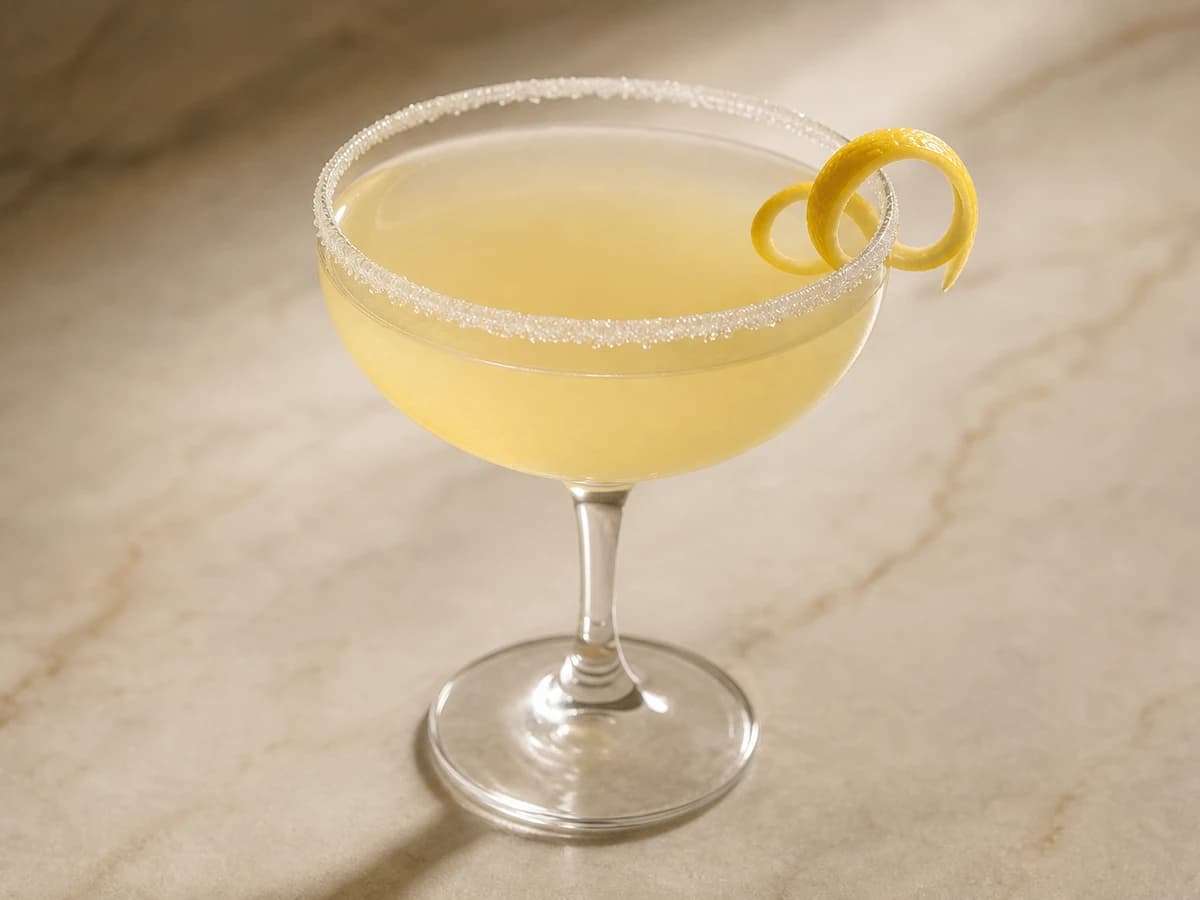
Lemon Drop Martini
You may like this because it shares a sour taste profile with the Blue Lagoon.
- Bramble
Bramble
You may like this because it shares a sour-forward profile with the Blue Lagoon, but uses gin instead of vodka.
Use up your ingredients
Bought a bottle just for this? Here's what else it's good for.
Related tools
Scale this for a party
Work out bottles, mixers, ice and total alcohol units for any number of guests.
Recipe confidence
The core blue curaçao/vodka pairing is well established, though exact ratios and the choice of lemon juice versus lemonade vary between sources.