The original definition
The Old Fashioned family
Spirit, sugar, bitters and water — the 1806 definition of a cocktail, still made the same way.
This is not merely an old drink; it is *the* drink. The first printed definition of a cocktail, in 1806, described spirits, sugar, water and bitters — which is precisely an Old Fashioned. Everything else in the canon is a departure from this template.
Its defining quality is restraint. There is no juice, no mixer and nothing to hide behind, so the entire drink is the spirit plus a small correction. That makes it the least forgiving family on the site and the most rewarding to get right.
The formula
Spirit · a little sugar · a couple of dashes of bitters · dilution from stirring — no citrus juice.
What makes a drink one of these
- Spirit-forward: the base is most of the volume and all of the flavour.
- Sweetened lightly, with sugar or syrup rather than a liqueur.
- Bittered, almost always with aromatic bitters.
- No citrus juice — a citrus twist is aroma, not acid.
- Stirred, never shaken: clarity and weight are the point.
Why the dilution matters more here
With no mixer, water from the ice is the only thing softening a full-strength spirit — and a properly stirred Old Fashioned is roughly a quarter water by the time it is served. Stopping the stir early does not make a stronger drink; it makes an unfinished one that tastes hot and closed.
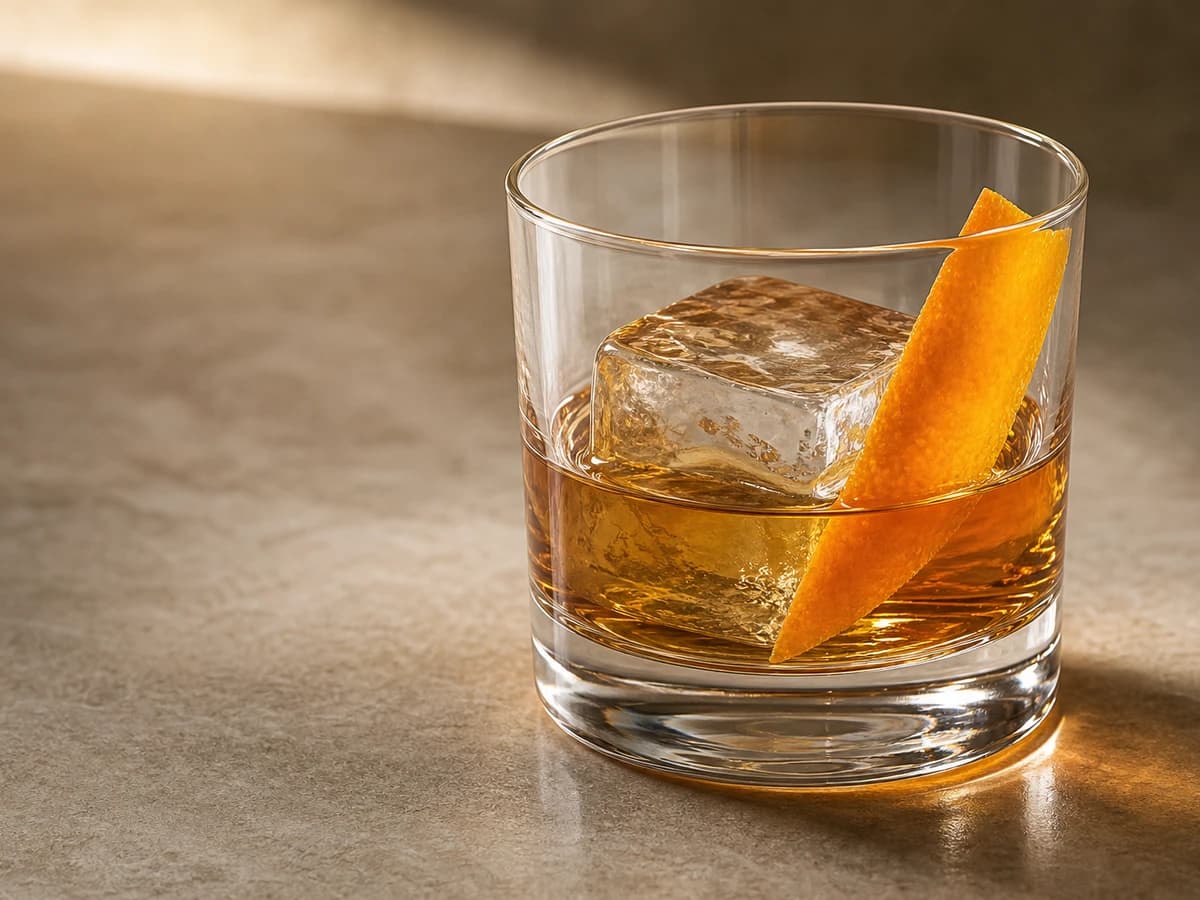
This is also why ice size matters more in this family than anywhere else. A single large cube melts slowly enough that the drink holds its balance for twenty minutes rather than drifting watery in five.
The sugar argument
Sugar cube muddled with bitters, or simple syrup? The cube is traditional and gives an uneven, slowly-dissolving sweetness that some drinkers genuinely prefer; syrup is consistent and dissolves immediately, which is why most bars use it.
Neither is wrong. What is worth avoiding is the mid-century drift toward muddled orange and cherry, which turns a spirit-forward drink into a fruit one — the practice the craft revival specifically set out to undo.
Show your working
What's established about this family
History claims graded the same way the rest of the site grades them.
- documented
The 1806 printed definition of a cocktail — spirits, sugar, water and bitters — describes what we now call an Old Fashioned.
The Balance and Columbian Repository, 13 May 1806. The structural match is exact, and the reading is near-universal in modern drinks writing.
Supported by contemporary printed sources — a dated book, menu, newspaper or legal record.
- widely-reported
The name arose from drinkers asking for a cocktail made the 'old-fashioned' way as newer, more elaborate drinks appeared.
Consistently repeated and entirely plausible given the drink's structure, but resting on later accounts rather than a contemporary source.
Consistently repeated across reputable modern drinks writing, but without a contemporary source we can point to.
The family
5 recipes
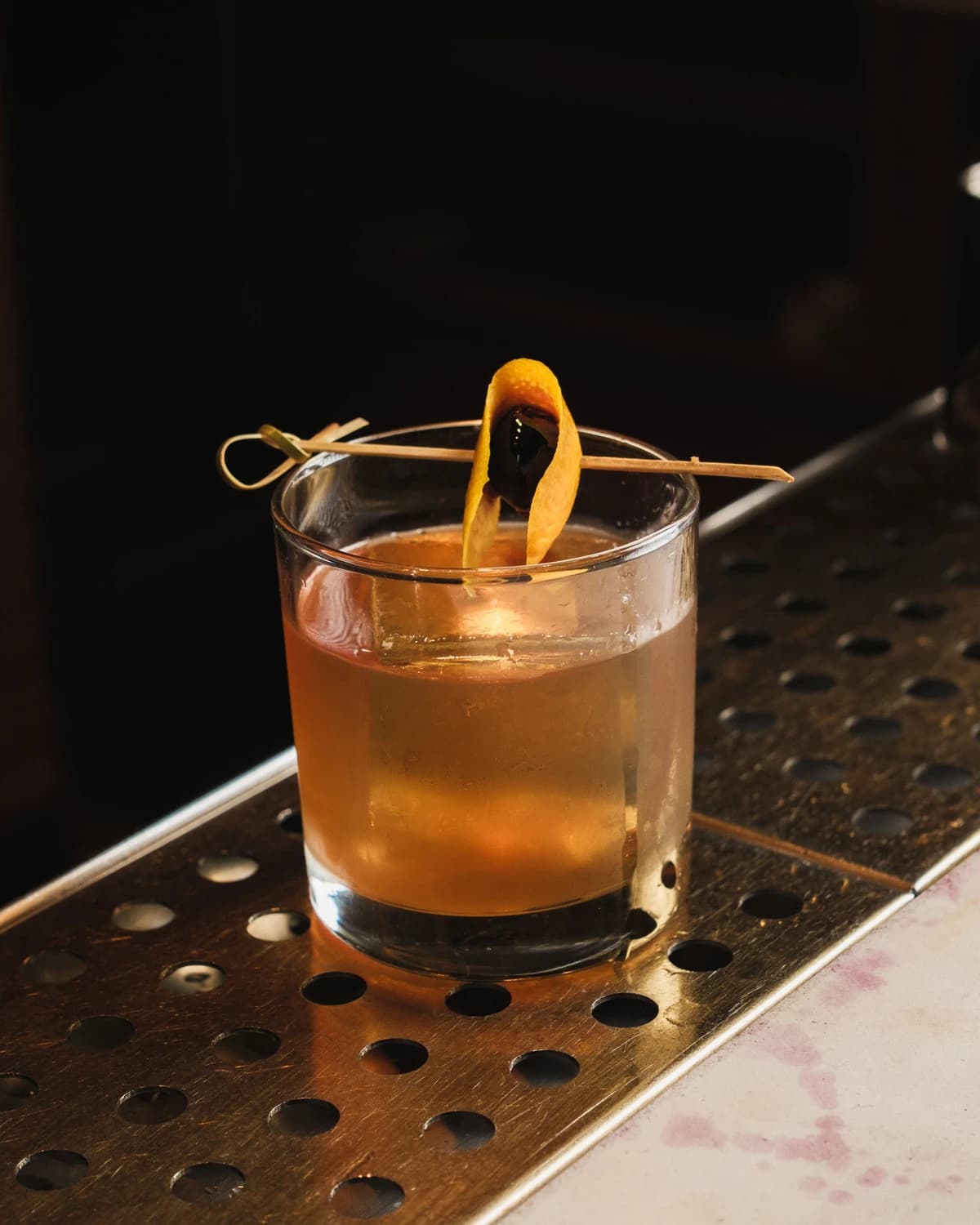
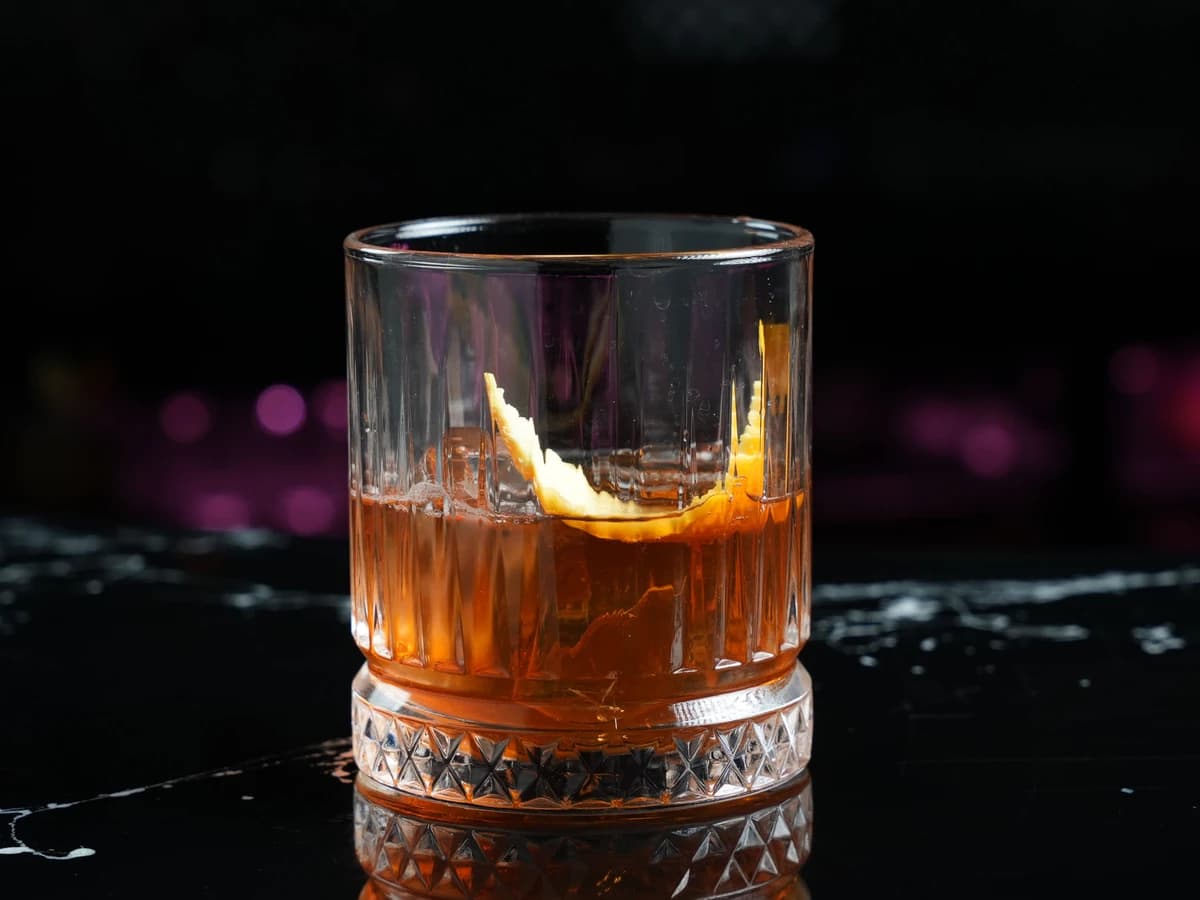
Every recipe on the site built to this structure.
Next door
Related families
How this structure connects to the rest of the canon.
Does the structure hold?
What these recipes are actually built from
The family is an editorial judgement. This is the independent structural read of the same recipes, worked out from their components — shown because the two agreeing is worth more than either claim on its own.
Spirit and sugar
5 of 5Spirit sweetened and seasoned, with nothing sour and nothing lengthening it — the oldest structure there is, and the one the Old Fashioned family is named for.
Every recipe in this family reads the same way structurally, which is about as clean as this gets — the editorial grouping and the component arithmetic agree completely.
Go deeper