1800s
Where the cocktail actually comes from
The first printed definition of a cocktail, the first bartending manual, and why almost everything else about the word's origin is guesswork.
The cocktail has an unusually precise starting point for something so old: a printed definition, in a newspaper, with a date. What it does not have is a credible origin story for its name, despite a long tradition of confidently supplying one.
Both facts are worth knowing, because they set the pattern for everything that follows in drinks history — a thin layer of documented record under a thick layer of very good stories.
The definition that started it
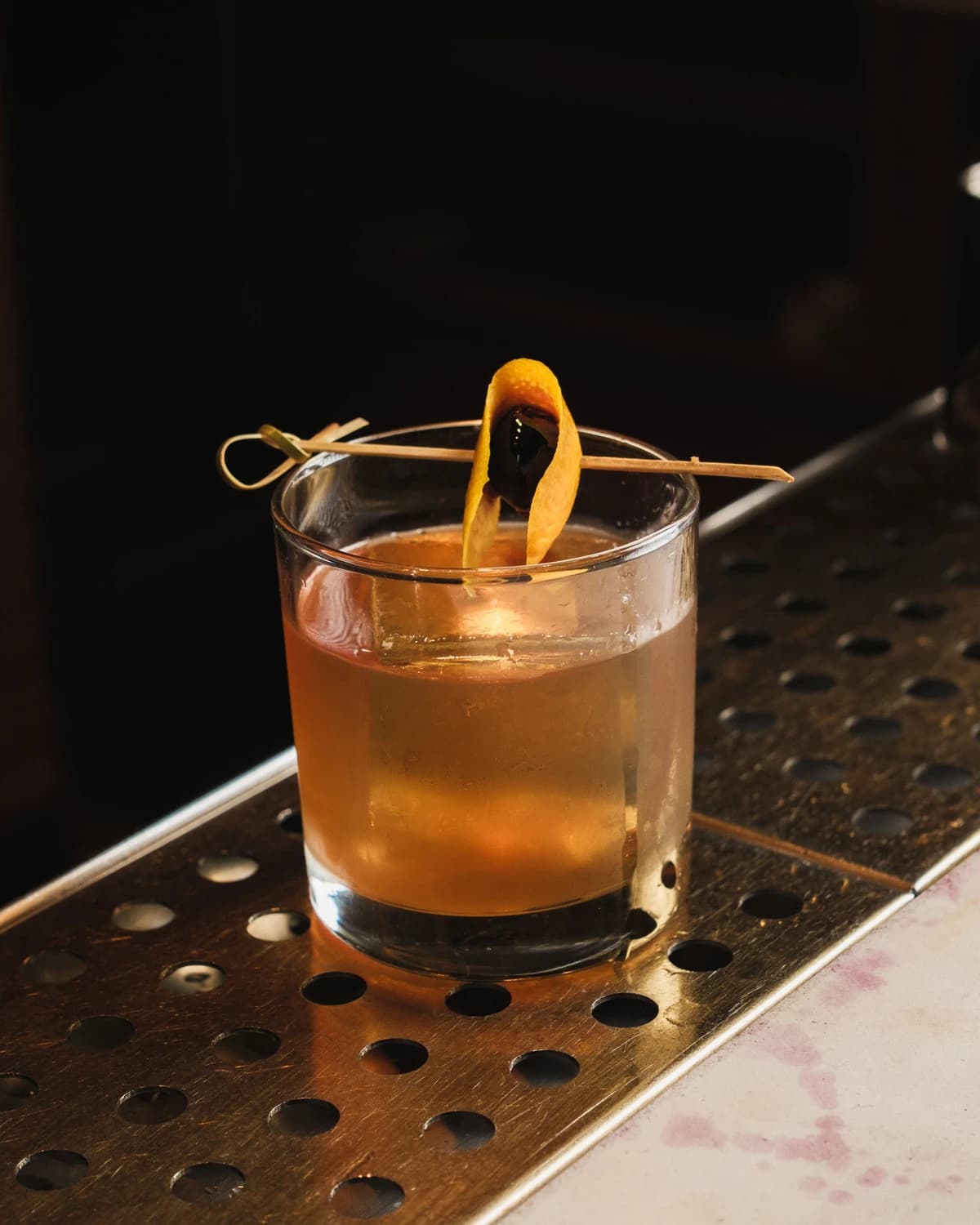
In 1806 a reader wrote to The Balance and Columbian Repository, a newspaper in Hudson, New York, asking what a 'cock-tail' was. The editor's reply defined it as a stimulating liquor composed of spirits of any kind, sugar, water and bitters. That is the template: spirit, sugar, water, bitters — what we would now call an Old Fashioned.
The definition matters because it is specific. A cocktail was not originally any mixed drink; it was one particular category among many — slings, juleps, punches, flips, cobblers — that happened to be the one whose name generalised. When people say the Old Fashioned is the original cocktail, this is what they mean, and unusually for drinks history it is broadly right.
The first manual
Jerry Thomas's How to Mix Drinks, or The Bon-Vivant's Companion appeared in 1862 and is the first substantial printed collection of drink recipes in English. It is the reason we know what mid-nineteenth-century American bars were actually serving rather than having to reconstruct it.
It also shows how much of the modern repertoire did not yet exist. There is no Martini as we would recognise it and no Daiquiri; there is a great deal of punch, and a Blue Blazer involving setting whisky on fire and pouring it between two mugs. The canon we treat as timeless is mostly later than people assume.
The name, and why nobody knows
Explanations for the word include docked horses' tails, a mixed-breed horse, the dregs of a barrel, a French egg-cup called a coquetier, and a tavern-keeper's daughter. Each of these is repeated in print regularly. None has contemporary evidence behind it.
The honest position is that the etymology is unknown. That is unsatisfying, which is precisely why so many confident alternatives circulate.
Show your working
What's actually established, and what isn't
Every claim on this page, with how well the evidence supports it.
- documented
The word 'cock-tail' was defined in print in 1806 as spirits, sugar, water and bitters.
The Balance and Columbian Repository, Hudson, New York, 13 May 1806 — a dated, printed source that survives and is widely reproduced.
Supported by contemporary printed sources — a dated book, menu, newspaper or legal record.
- documented
Jerry Thomas published the first substantial English-language bartender's manual in 1862.
How to Mix Drinks, or The Bon-Vivant's Companion — the book itself is the evidence.
Supported by contemporary printed sources — a dated book, menu, newspaper or legal record.
- widely-reported
The Old Fashioned is essentially the 1806 definition preserved.
The structural match is exact and the reading is near-universal in modern drinks writing, but no contemporary source draws the line explicitly.
Consistently repeated across reputable modern drinks writing, but without a contemporary source we can point to.
- folklore
The word derives from the French 'coquetier', an egg-cup used by a New Orleans apothecary.
Repeated frequently, particularly in New Orleans. No contemporary documentation supports it, and the 1806 citation predates the usual dating of the story.
A good story with no supporting evidence. Repeated here because you will encounter it, not because it is true.
- folklore
The name comes from the practice of docking horses' tails, or from mixed-breed 'cocktailed' horses.
One of several competing etymologies with no contemporary evidence. Listed because it is common, not because it is likely.
A good story with no supporting evidence. Repeated here because you will encounter it, not because it is true.
The short version
- The cocktail has a dated printed definition from 1806: spirits, sugar, water, bitters.
- That definition describes what we now call an Old Fashioned.
- Jerry Thomas's 1862 manual is the first substantial recipe collection in English.
- The origin of the word itself is genuinely unknown — every popular explanation is folklore.
Drink the history
Recipes from this period

Keep reading
Related history
What the historical record supports about American Prohibition's effect on drinking — and the one story about it that almost certainly isn't true.
Why so much of the classic canon is traceable to a handful of hotel bars, and what their published books actually record.
How the classics came back, what the revival got right, and the habits it introduced that are worth leaving behind.