Aged spirit, sweet vermouth, bitters
The Manhattan family
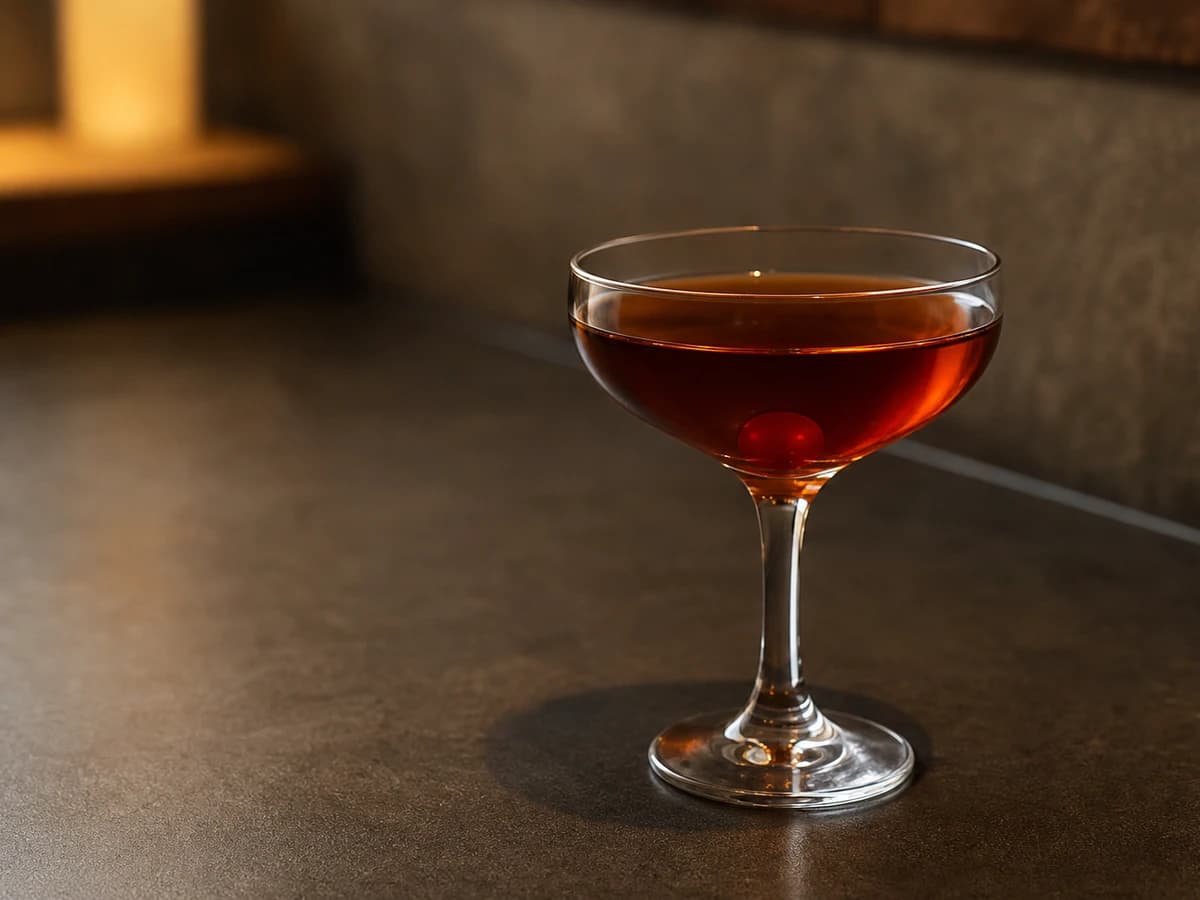
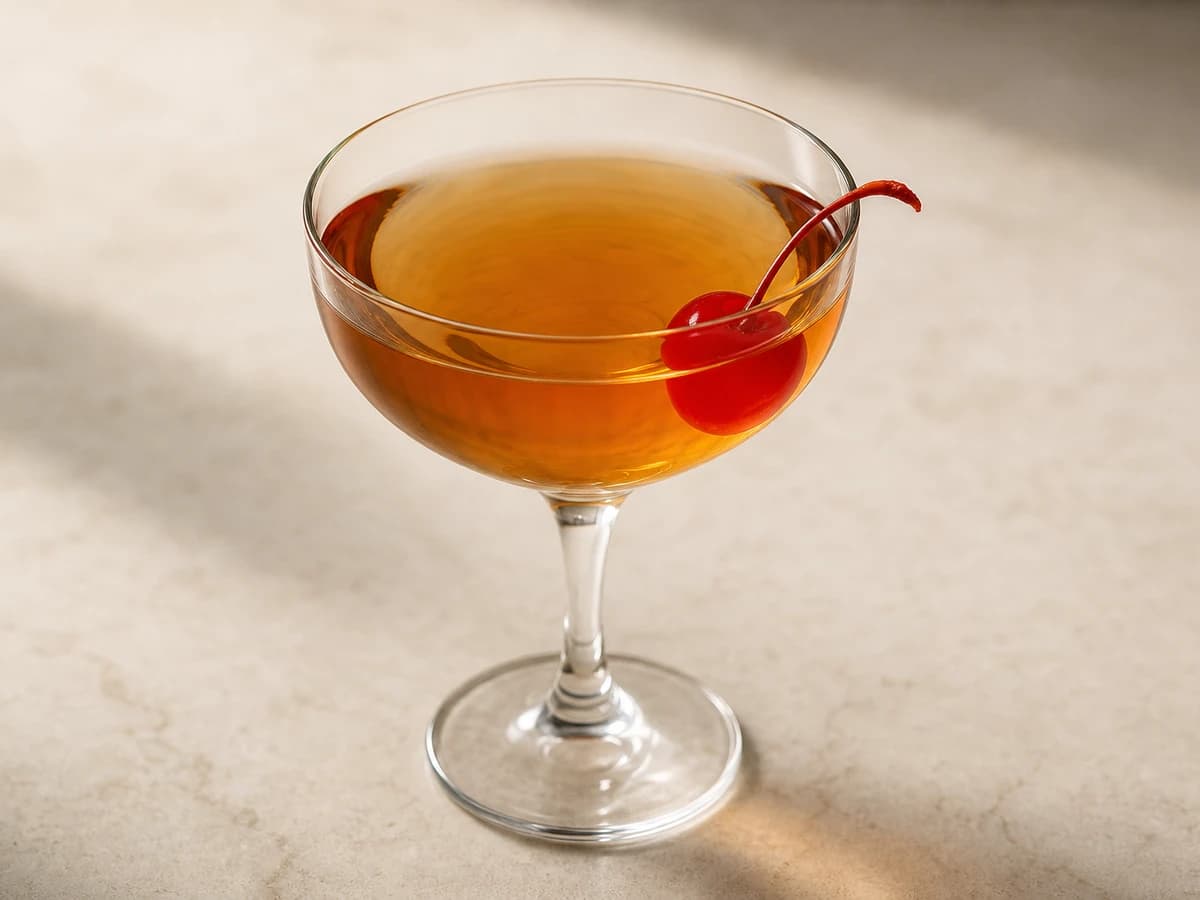
Whiskey stirred with sweet vermouth and bitters — the richer, rounder counterpart to the Martini.
The Manhattan is the Martini's structure with the volume turned up: an aged spirit instead of a clear one, sweet vermouth instead of dry, and bitters to tie the two together. Where a Martini is austere, this is round and slightly sweet.
It is also the most forgiving of the great stirred drinks, which makes it a good first step for anyone finding Martinis or Old Fashioneds too severe.
The formula
2 parts aged spirit · 1 part sweet vermouth · 2 dashes bitters — stirred, served up or over a large cube.
What makes a drink one of these
- An aged base spirit — rye and bourbon are the traditional choices.
- Sweet (red) vermouth as the modifier.
- Aromatic bitters, almost always.
- Stirred and served up or over a single large cube.
- No citrus juice.
Rye or bourbon
Rye is the traditional choice and the better one for most palates: its spice and dryness cut through sweet vermouth in a way bourbon's corn sweetness does not. A bourbon Manhattan is rounder, sweeter and, unless you like it that way, closer to cloying.
This is the clearest example on the site of a base-spirit swap genuinely changing a drink rather than merely tinting it.
The variations worth knowing
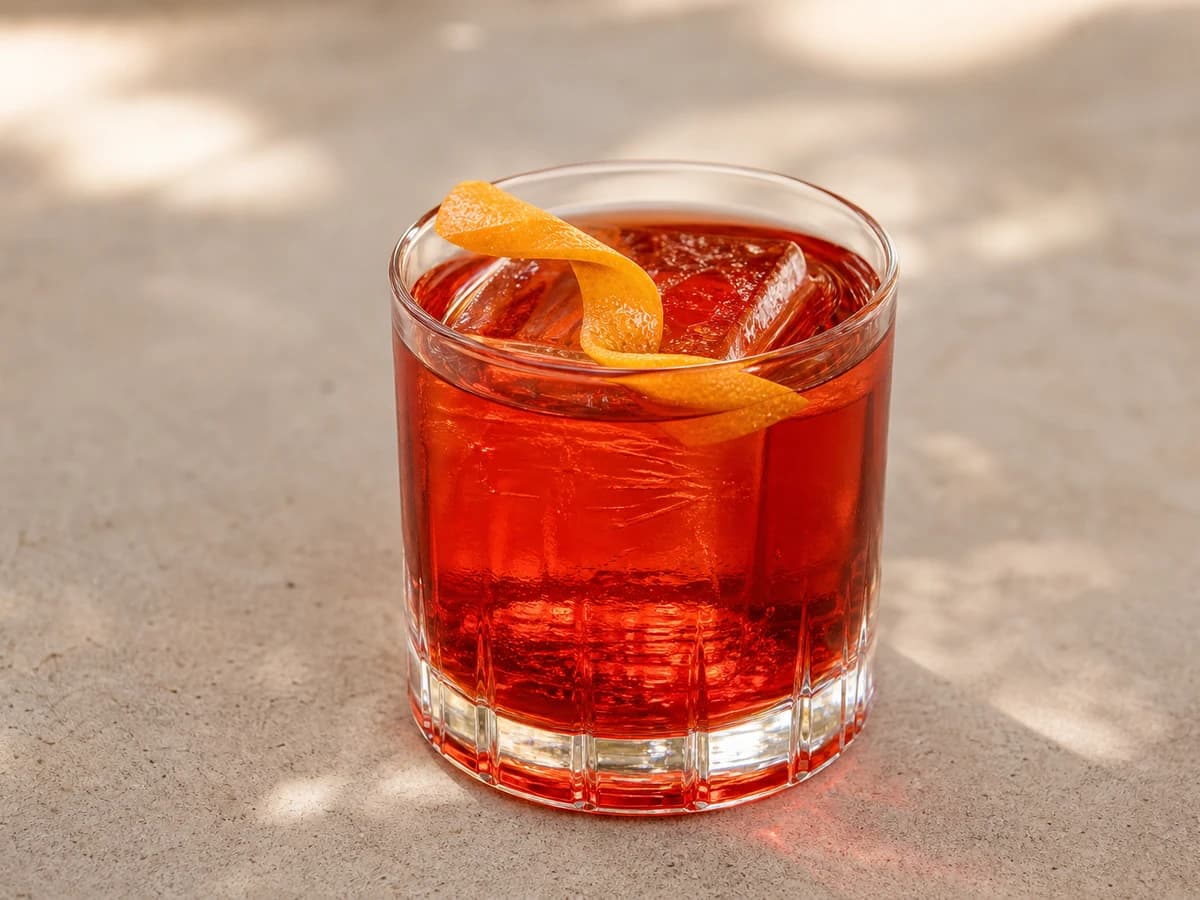
A Perfect Manhattan splits the vermouth between sweet and dry, which dries the whole drink out and is worth trying if the standard version reads as too sweet. A Rob Roy is the same drink built on Scotch. A Boulevardier trades the bitters for Campari and lands somewhere between this family and the Negroni.
Each of those is one substitution away from the original, which is exactly how the family works.
Show your working
What's established about this family
History claims graded the same way the rest of the site grades them.
- documented
The Manhattan appears in printed bar manuals from the 1880s onward.
Recorded in multiple published sources of the period with a recognisably modern structure.
Supported by contemporary printed sources — a dated book, menu, newspaper or legal record.
- folklore
It was invented at the Manhattan Club for a banquet hosted by Jennie Jerome, Winston Churchill's mother.
Repeated constantly and demonstrably problematic — Jerome was in England at the claimed time. Included because you will meet the story, not because it holds up.
A good story with no supporting evidence. Repeated here because you will encounter it, not because it is true.
The family
8 recipes
Every recipe on the site built to this structure.
Next door
Related families
How this structure connects to the rest of the canon.
The same spirit-plus-vermouth structure, drier and clear.
Swap the vermouth back for sugar and you return to it.
Shares the bitter-modifier idea, taken to equal parts.
Does the structure hold?
What these recipes are actually built from
The family is an editorial judgement. This is the independent structural read of the same recipes, worked out from their components — shown because the two agreeing is worth more than either claim on its own.
Spirit and modifier
6 of 8Spirit combined with an aromatised or flavoured modifier and little else — concentrated, and served small for exactly that reason.
Spirit and sugar
2 of 8Spirit sweetened and seasoned, with nothing sour and nothing lengthening it — the oldest structure there is, and the one the Old Fashioned family is named for.
6 of 8 read as spirit and modifier. The rest differ because length, ice and service are part of what makes a family and none of them are visible in a component list — a drink can be built like a sour and served like a highball, and both descriptions are true.
Go deeper