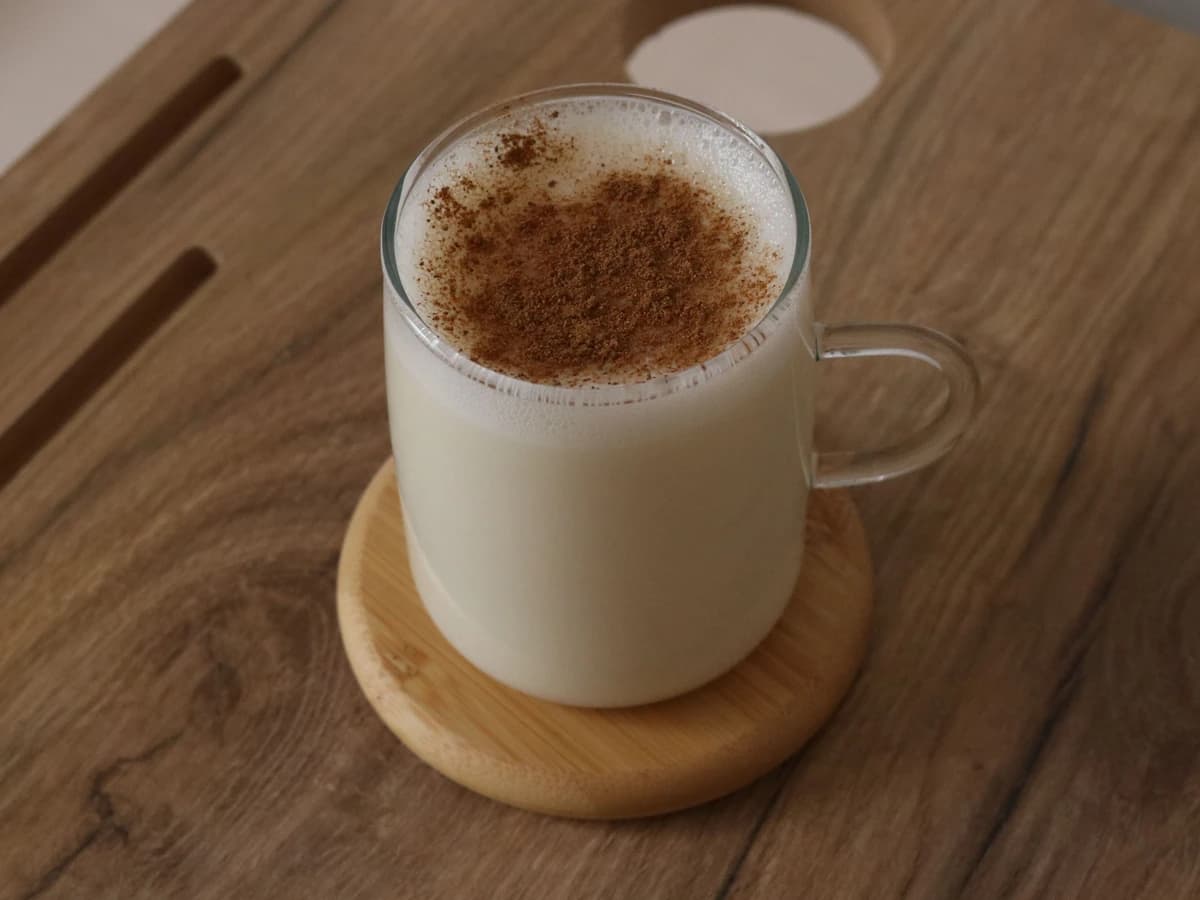
Tom and Jerry
Dark rum and brandy whisked into a spiced egg batter and topped with hot water or milk — a rich, historic holiday punch.
- Difficulty
- advanced
- Prep time
- 10 min
- Strength
- 15% ABV
- Glassware
- Heatproof punch mug
- Base
- rum
- Serves
- 1
Ingredients
- Dark rum30ml
- Brandy or cognac30ml
- Egg yolk15ml
One yolk, whisked with the sugar into a smooth batter — see food-safety tip
- Brown sugar10ml
- Hot water or hot milk90ml
Hot milk gives a richer result than water
Garnish: Grated nutmeg
Method
- In a small bowl, whisk the egg yolk and brown sugar together vigorously until pale, smooth and slightly thickened — this is the 'batter'.
- Spoon the batter into a heatproof mug.
- Add the dark rum and brandy and stir to loosen the batter into the spirits.
- Top with hot water or hot milk, stirring continuously as you pour to keep everything smoothly combined rather than curdled.
- Finish with a generous grating of nutmeg on top.
Equipment
Don't have everything? Here's what works instead.
Mixing glass or small bowl
Household swap: Any small mixing bowl works fine for whisking the batter.
Bar spoon
Household swap: A whisk or fork works better than a spoon for properly emulsifying the egg batter.
Jigger
Household swap: A tablespoon measure (1 tbsp ≈ 15ml) is close enough.
Missing an ingredient?
Each swap below says what it changes and how to correct for it, so you can decide whether you are making this drink or a neighbouring one.
Instead of Hot Water
Best substitute: Hot Coffee
This is the lengthener in this drink.
Flavour impact: Swapping in hot coffee for the water or milk adds a roasted bitterness that plays well against the rich, sweet batter.
What changes
Hot Coffee moves the drink a long way — more acidity, more bitterness and more intensity. This is worth making deliberately rather than as a stand-in.
- Acidity ↑
- More acidity makes the drink taste fresher and drier, and can push a balanced sour over into sharp.
- Bitterness ↑
- Bitterness builds across a drink rather than announcing itself, so this will read as a longer, drier finish.
- Intensity ↑
- A more intensely flavoured ingredient will start to dominate the components around it.
- Character
- Both are warm, and you lose neutral, and you gain bitter, roasted and aromatic. Numbers can't see this: two ingredients can be identically sour and still smell nothing alike.
To correct for it
- Use slightly less of it, or add a touch more sweetener to hold the balance.
- Pour slightly less, or lengthen the drink a little, and let the sweetness catch up.
- Scale it back by a third and let the other ingredients hold their share.
Moderate confidenceA less traditional but well-liked modern variant of the classic build.Makes a different drinkBecomes a variation
Make it better
- Use a pasteurised egg, or a very fresh egg you trust the source of — this drink relies on raw yolk for its texture, so treat it with the same care you'd give a homemade mayonnaise or mousse.
- Whisk the batter thoroughly before adding any liquid; a lumpy, under-whisked batter never fully smooths out once hot liquid is added.
- Add the hot water or milk gradually while stirring, rather than all at once, to avoid any risk of the egg scrambling from sudden heat.
- Make a larger batch of batter ahead of time if serving several people, so each mug only needs a spoonful added rather than starting from scratch.
- Adjust sweetness gradually and taste as you go — it's easy to add more syrup, impossible to take it out.
Rescue this drink
- Batter looks curdled or scrambled
- The liquid was added too hot or too fast. Let the hot water or milk cool slightly and stir it in gradually next time.
- Texture is thin rather than rich
- Whisk the egg yolk and sugar for longer at the start — it should be noticeably paler and thicker before you add anything else.
- Too sweet
- Cut the brown sugar to 1 tsp per mug and rebuild from there.
- Tastes eggy
- Make sure the sugar is fully whisked into the yolk before adding liquid, and don't skimp on the spirits or nutmeg, both of which help balance the aroma.
- Grainy, with sugar at the bottomgeneral guidance
- Granulated sugar will not dissolve in cold spirit, however long you stir. Muddle it with the bitters and a splash of water first until the grains are gone, then build the drink — or use a syrup, which is the same thing pre-dissolved.
- The foam collapses, or there is far too much of itgeneral guidance
- Collapsing usually means the dry shake was too short or came after the ice rather than before it. Too much foam is the opposite problem — an over-long dry shake with a small drink underneath. Fifteen seconds dry, then ten with ice, is the ratio to keep; if the head still runs over the glass, the drink is too small for the amount of white in it.
- It separates in the glassgeneral guidance
- A built drink with several ingredients relies on the pour to mix it, and denser components — syrups, purées, juice concentrates — sink. Give it one full stir from the bottom up with a bar spoon before garnishing. If it separates again while standing, it wants building over more ice rather than more stirring.
- Too weak or waterygeneral guidance
- Add a splash more of the base spirit rather than extra mixer. For stirred or built drinks, over-dilution from ice is the usual cause — try a shorter stir or fewer, larger ice cubes.
- Too stronggeneral guidance
- Stir or shake for a little longer to add dilution, or add a splash of chilled water. This is a spirit-forward drink by design, so some strength is expected.
Make ahead & storage
Make to order
Make this one to order — the foam has to be shaken fresh. You can still measure and group the ingredients in advance, which is most of the work.
- Egg yolk:
- The foam is built by the shake and cannot be made in advance.
What it tastes like
The taste, and what drives it
very sweet, soft, very rich — a long and lengthened drink served long, over ice.
Very sweet
Dry → Sweet
A sweet drink by design — the sugar is a feature, not a fault.
What drives it: Brown sugar — carries the most sugar into the glass.
Very rich
Light → Rich
Very rich — this is closer to a dessert than to a refreshment.
What drives it: Dark rum — adds most of the weight.
Very bold
Delicate → Bold
Very bold — concentrated, and served small for that reason.
What drives it: Dark rum — is the most concentrated thing in the glass.
What you smell first
- Baking spiceLeadsBefore the first sip
From Dark rum, Grated nutmeg
- Orchard fruit
From Brandy or cognac
- Caramel and molasses
From Dark rum, Brown sugar
- Oak
From Dark rum, Brandy or cognac
- Vanilla
From Brandy or cognac
Aromas marked as sitting above the drink reach you before the first sip — skipping that garnish changes the drink more than its size suggests.
How it was worked out
Each reading comes from the recipe's own recorded taste scores combined with what each ingredient contributes, weighted by how much of it is in the glass. Almost everything in this drink has detailed ingredient data behind it.
How balance actually works →If it isn't right
What goes wrong with this drink, and why
Only the faults this particular recipe is actually prone to — each with the likely cause, the adjustment, and what the adjustment costs you.
It's too sweet
- Likely cause
- Brown sugar is carrying the sugar here, and it is the easiest thing in the drink to over-pour — syrup clings to a jigger and a "splash" is rarely the same twice.
- What to change
- Cut brown sugar by about a third and rebuild. If it is already made, a squeeze of citrus is faster than starting again.
- What that does
- It will taste drier and slightly thinner — sugar carries body as well as sweetness, so you lose a little weight along with it.
It's too strong
- Likely cause
- Dark rum dominates by design here — this is a drink built to be sipped, and it is under-diluted more often than it is over-poured.
- What to change
- Building in the glass for longer, or add a measured 5–10ml of water. Both are the same correction; one is just more honest about it.
- What that does
- Alcohol heat drops and the aromatics open up — a slightly diluted spirit-forward drink usually smells better, not worse.
It doesn't smell of anything
- Likely cause
- The aroma you are missing is probably baking spice, which sits above the drink rather than in it — skipping or under-expressing the garnish removes it entirely.
- What to change
- Express the peel over the surface with the skin facing the drink, then drop it in. Herbs go in the glass, not on the side.
- What that does
- Aroma arrives before flavour does, so the whole drink reads as more intense without a single measure changing. The oil does land in the drink, though — an over-expressed peel adds a faint bitterness to the first mouthful.
Taste profile
- Sweetness
- 4/5
- Sourness
- 0/5
- Bitterness
- 0/5
- Strength
- 4/5
- Fruitiness
- 0/5
- Freshness
- 0/5
- Creaminess
- 4/5
- Smokiness
- 0/5
Nutrition & alcohol
Estimate onlyEgg size and the choice of hot water versus hot milk both shift the calorie count noticeably.- Calories
- 225 kcal
- Sugar
- 8 g
- Carbohydrates
- 9 g
- Alcohol units (UK)
- 2.4
- US standard drinks
- 1.35
- ABV
- 15%
- Serving size
- 160 ml
Show calculation assumptions
Source: Calculated from standard measures
Calorie breakdown: ~133 kcal from alcohol, ~92 kcal from sugar and mixers.
Likely range: 169–281 kcal, reflecting the confidence level above — not a lab-measured figure.
Based on 30ml dark rum and 30ml brandy, both at 40% ABV, one egg yolk, 2 tsp brown sugar and 90ml hot water.
These figures are estimates, not laboratory measurements — individual tolerance to alcohol varies. See our responsible drinking guidance.
Variations
Tom and Jerry with Milk
Use hot whole milk instead of water for a richer, more custard-like finish.
Batch Tom and Jerry Bowl
Multiply the batter recipe and keep it in a punch bowl, letting guests spoon their own portion into a mug with spirits and hot water.
What kind of drink this is
The structure behind the recipe
A built build: a long and lengthened rum-based drink, served long, over ice — clean in the mouth.
Long and lengthened
A short measure stretched with a mixer or juice — the drink's length, not its concentration, is the point of it.
Base
Dark rum
Modifier
Brandy or cognac
Sweet element
Brown sugar
Lengthener
Hot water or hot milk
Texture
Egg yolk
Technique
built
Components are poured into the serving glass over ice and stirred once, or not at all. Dilution happens while you drink rather than before.
The drink changes as you go: strongest at the first sip, longest and most diluted at the last. That drift is a feature of a long drink and a fault in a short one.
What it ruins: Nothing, but it cannot properly combine anything viscous — a syrup poured last will sit at the bottom.
Everything about building in the glass →How the technique works →Dilution
In the glass, as you drink
Water from ice typically makes up around 15% of the finished drink for a built build (commonly 10–20%). Dilution is an ingredient here, not a side effect.
Why dilution is an ingredient →Served
Long, over ice
Heatproof punch mug · 160ml
Served on ice, so it keeps chilling in the glass. A larger, colder, slower drink than the same spirits served straight up.
Texture and aroma
Nothing here thickens or aerates the drink — it is as light in the mouth as the liquid itself.
No dedicated aromatic component — what you smell is the spirit itself, which is a deliberate choice in a drink this spare.
Where to go from here
Each of these is here because of something specific about this drink, not as a standard set of links.
Drinking this with food: pudding, and afterwards
On its recorded taste scores this drink meets the test for pudding, and afterwards — the page explains the principle behind it rather than simply asserting the pairing.
Bar techniques worth the trouble
This one asks for real technique. The advanced path covers the methods behind it and is honest about which are worth the trouble.
Where this fits in a home bar
Dark Rum is bottle 5 in the order that unlocks the most drinks — buying it opens up 6 recipes beyond the ones before it.
Where it comes from
Origin and family
Origin of the Tom and Jerry
A 19th-century American winter classic, said to be popularised by writer and bartender Jerry Thomas; traditionally served from a punch bowl through the holiday season.
Ingredient slug `egg-yolk` was introduced for this batch — see summary. This is a genuinely historical raw-egg drink; the food-safety guidance above (pasteurised or well-sourced fresh eggs, gradual heating) reflects standard modern kitchen practice rather than a departure from tradition.
On drinks history
Cocktail origin stories are frequently repeated and rarely evidenced. Our history section separates what is documented from what is folklore rather than picking whichever version reads best.
History and culture →Try this next
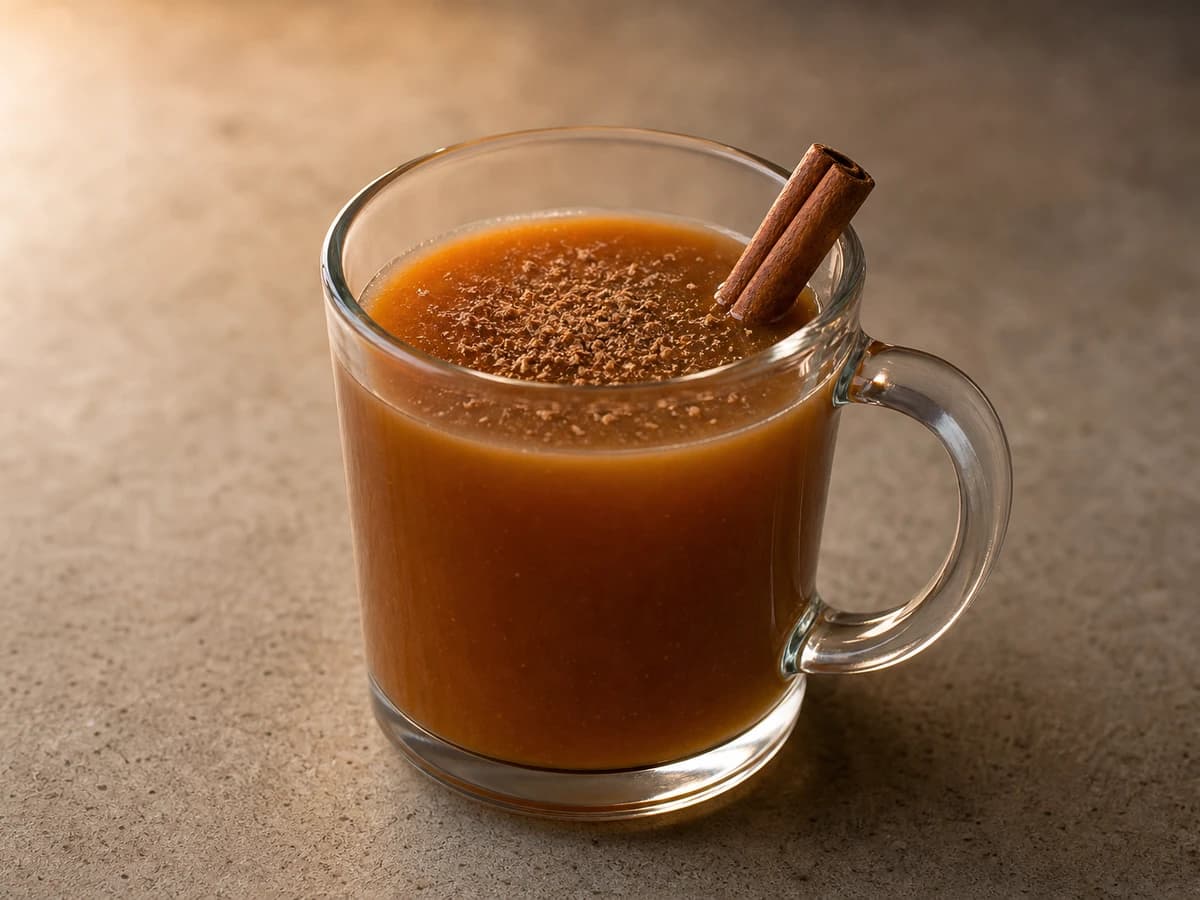
Hot Buttered Rum
You may like this because it's part of the same hot drink family as the Tom and Jerry.
- Brandy Alexander
Brandy Alexander
You may like this because it shares a sweet-forward profile with the Tom and Jerry, but uses brandy instead of rum.
White Russian
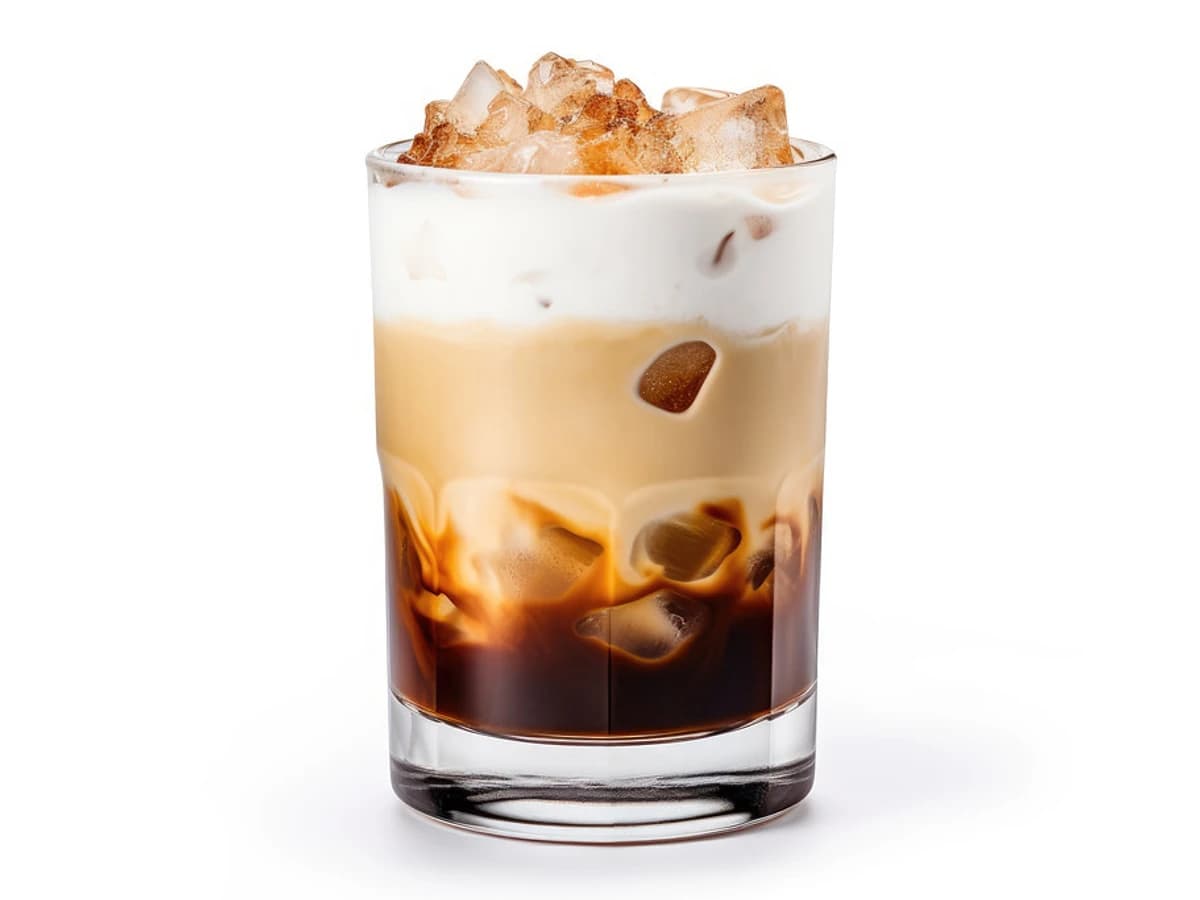
You may like this because it shares a creamy-forward profile with the Tom and Jerry, but uses vodka instead of rum.
Questions people ask
- Why did my batter curdle?
- See "Rescue this drink" above — the liquid went in too hot or too fast. Let it cool slightly and stir it in gradually.
- Why whisk the yolk and sugar first?
- It's what gives the drink its body — see "Rescue this drink" above. The mixture should be noticeably paler and thicker before anything else goes in, or the result comes out thin.
- Can I serve it to a group?
- Yes — there's a variation listed above for a batch batter kept in a punch bowl, with guests spooning their own portion into a mug.
Use up your ingredients
Bought a bottle just for this? Here's what else it's good for.
Related tools
Scale this for a party
Work out bottles, mixers, ice and total alcohol units for any number of guests.
Recipe confidence
Well-documented 19th-century classic, though home versions vary in exact spice and dairy choices.