Garden Highball
Alcohol-free botanical spirit, tonic, cucumber and mint — a crisp, herbal highball for the garden.
- Difficulty
- easy
- Prep time
- 4 min
- Strength
- Alcohol-free
- Glassware
- Highball glass
- Base
- alcohol free
- Serves
- 1
Related drinks
One thing worth checking on the label
This recipe is built on a product that is not always completely alcohol-free. For most people that makes no difference; if you are avoiding alcohol entirely, it is worth reading the bottle rather than the category name.
- Alcohol-free botanical spirit — Labelling varies by market: in the UK “alcohol-free” is typically 0.05% ABV or below, while a product sold as “de-alcoholised” can be considerably higher.
Soda water and tonic water contain no alcohol at all, so where it matters they are always a safe substitution — see the swaps above for what that does to the drink.
More on alcohol-free products and what varies between them →Ingredients
- Cucumber slices3ml
About 3 slices, muddled
- Fresh mint leaves5ml
About 6 leaves, plus a sprig for garnish
- Alcohol-free botanical spirit50ml
- Tonic water150ml
To top
Garnish: Cucumber ribbon, Mint sprig
Method
- Muddle the cucumber and mint gently in the base of a highball glass.
- Fill the glass with ice.
- Add the alcohol-free botanical spirit.
- Top with tonic water and stir once, lifting the muddled cucumber and mint from the bottom.
- Garnish with a cucumber ribbon and mint sprig.
Equipment
Don't have everything? Here's what works instead.
Muddler
Household swap: The handle end of a wooden spoon.
Jigger
Household swap: A tablespoon measure (1 tbsp ≈ 15ml).
Missing an ingredient?
Each swap below says what it changes and how to correct for it, so you can decide whether you are making this drink or a neighbouring one.
Instead of Tonic Water
Best substitute: Soda Water
This is the lengthener in this drink.
Flavour impact: Drier and less bitter; add a squeeze of lime to keep the drink lively.
What changes
Soda Water moves the drink a long way — less sweetness, less bitterness and less intensity. This is worth making deliberately rather than as a stand-in.
- Sweetness ↓
- Less sweetness leaves the acid and the spirit more exposed, so the drink will taste sharper and drier than it should.
- Bitterness ↓
- Losing bitterness makes the drink rounder and more approachable, and takes away the structure that stopped it tasting like squash.
- Intensity ↓
- A milder ingredient gets buried by whatever else is in the glass, and the drink loses the thing it was named for.
- Character
- Both are fizzy, and you lose bitter, sweet-edged and quinine, and you gain neutral, clean and light. Numbers can't see this: two ingredients can be identically sour and still smell nothing alike.
To correct for it
- Add a little more syrup, a small amount at a time, until the edges come back together.
- A dash of bitters restores some of the backbone without changing anything else.
- Increase the measure, or accept a gentler drink and reduce the components competing with it.
Moderate confidenceA workable lighter alternative that loses the tonic's quinine bitterness.Makes a different drinkBecomes a variation
Want to change something these swaps do not cover — too sweet, too thin, a herb you dislike? How to adjust any mocktail works by what each component does rather than by ingredient name.
Make it better
- Peel a couple of the cucumber slices before muddling — the skin can turn slightly bitter under pressure.
- Muddle gently; the goal is to release oils and juice, not pulp the cucumber.
- Use a light, dry tonic rather than a very sweet one so the botanical spirit's flavour still comes through.
- Add the carbonated mixer last, after shaking or stirring the rest, and pour gently to keep as much fizz as possible.
Rescue this drink
- Tastes bitter
- The cucumber skin or mint was likely over-muddled — press gently next time, or peel the cucumber first.
- Botanical flavour is too faint
- Increase the alcohol-free spirit to 60ml, or use fewer ice cubes to limit dilution.
- Flat
- Top with fresh tonic water just before serving and stir minimally.
- It foams over when the mixer goes ingeneral guidance
- Something in the glass is nucleating the carbonation — usually fresh ice with frost on it, or a sugary residue on the side. Pour the mixer slowly down the inside of the glass onto a spoon rather than onto the ice, and add it last. A drink built the other way round loses most of its fizz before it reaches the table.
- You cannot smell itgeneral guidance
- Most of a drink's aroma is on top of it, not in it. Slap the herb sprig once between your palms before it goes in; it bruises the surface oils without shredding the leaf. Aroma also fades fastest of anything in a drink, so garnish at the moment of serving rather than in advance.
- The garnish is louder than the drinkgeneral guidance
- A garnish is seasoning, and this one carries an aromatic garnish on a drink that is not especially assertive. If it smells more of the garnish than of itself, use less of the aromatic one rather than removing both — whole spices in particular keep giving long after the first sip.
- Too sweetgeneral guidance
- Add a small amount of fresh citrus juice or a dash of bitters to bring the balance back — adjust gradually and taste as you go.
- Too sourgeneral guidance
- Add a little more sweetener (simple syrup or the cocktail's usual sweetening ingredient), a small amount at a time.
- Served too warmgeneral guidance
- Chill the glass, ice and every ingredient ahead of time — a warm pour is the fastest way to lose a cold drink's balance. For one serving, there's no real fix beyond rebuilding it properly chilled; for a batch, keep everything refrigerated until the moment of serving and add ice last.
- No muddlergeneral guidance
- The handle end of a wooden spoon.
Make ahead & storage
Batch the base, finish at serving
Batch the 3 stable components days ahead and add tonic water when you pour.
- Tonic water:
- Carbonated — it goes flat in a bottle, and there is no way to put the fizz back.
What it tastes like
The taste, and what drives it
dry, gentle, very light, sparkling — a long and lengthened drink served long, over ice.
Dry
Dry → Sweet
Barely sweetened. The spirit and the acid are what you taste.
What drives it: Tonic water — carries the most sugar into the glass.
Gentle
Soft → Sharp
A trace of acidity, there to lift rather than to be noticed.
No single ingredient accounts for this — it comes from the combination rather than from one bottle.
Gently bitter
Gentle → Bitter
Bitterness as structure — it stops the drink tasting like squash without being the point.
What drives it: Tonic water — provides the bitterness.
Very light
Light → Rich
Almost weightless in the mouth — closer to a long soft drink than to a sipper.
No single ingredient accounts for this — it comes from the combination rather than from one bottle.
Very sparkling
Still → Sparkling
Carbonated, which lifts the aromatics and makes the drink taste drier than its sugar content alone would suggest.
What drives it: Tonic water — carries the carbonation.
Delicate
Delicate → Bold
Delicate. Rewards attention rather than demanding it.
What drives it: Alcohol-free botanical spirit — is the most concentrated thing in the glass.
What you smell first
- MintLeadsBefore the first sip
From Fresh mint leaves, Mint sprig
- Juniper and botanicals
From Alcohol-free botanical spirit
Aromas marked as sitting above the drink reach you before the first sip — skipping that garnish changes the drink more than its size suggests.
How it was worked out
Each reading comes from the recipe's own recorded taste scores combined with what each ingredient contributes, weighted by how much of it is in the glass. Almost everything in this drink has detailed ingredient data behind it.
How balance actually works →If it isn't right
What goes wrong with this drink, and why
Only the faults this particular recipe is actually prone to — each with the likely cause, the adjustment, and what the adjustment costs you.
The herbs can be muddled too far
Degrades itPressing releases aromatic oil; shredding releases chlorophyll, which is bitter and grassy. The second is not a stronger version of the first — it is a different flavour.
How to handle it: Press two or three times and stop. If the leaves have gone black and the drink smells of cut grass, it has gone past it.
It's too bitter
- Likely cause
- Tonic water is doing this deliberately, but bitterness also *builds* across a drink rather than announcing itself — the last mouthful is more bitter than the first even though nothing changed.
- What to change
- Lengthen it slightly, or add a small amount of sweetener. Do not add more of anything sour; acid sharpens bitterness rather than covering it.
- What that does
- The bitterness softens and the drink gets longer. If you were hoping to keep it short and strong, this is the trade you are making.
It tastes weak
- Likely cause
- With no alcohol to carry flavour and no heat to cut through, an alcohol-free drink has to work harder for the same presence — thinness here is almost never a measuring error.
- What to change
- Add acidity or bitterness rather than more fruit. Sweetness is what is usually already too high in a thin mocktail.
- What that does
- The drink gains definition without gaining sugar. It will also read as slightly sharper, which is what 'more presence' usually means in practice.
It's gone flat
- Likely cause
- Tonic water loses gas to warmth, to agitation and to anything it can nucleate against — pulp, sugar crystals, a dry glass.
- What to change
- Chill the mixer properly, add it last, pour it against the inside wall of the glass, and stir once at most.
- What that does
- The bubbles last, which also makes the drink taste drier — carbonation contributes a real acidity of its own on top of the lift.
It doesn't smell of anything
- Likely cause
- The aroma you are missing is probably mint, which sits above the drink rather than in it — skipping or under-expressing the garnish removes it entirely.
- What to change
- Express the peel over the surface with the skin facing the drink, then drop it in. Herbs go in the glass, not on the side.
- What that does
- Aroma arrives before flavour does, so the whole drink reads as more intense without a single measure changing. The oil does land in the drink, though — an over-expressed peel adds a faint bitterness to the first mouthful.
It tastes one-dimensional
- Likely cause
- With 4 components there is nowhere for complexity to hide — a long and lengthened drink is exposed by design, so a dull one is usually a dull ingredient rather than a missing step.
- What to change
- Change the quality of what is there before adding anything new: fresh citrus rather than bottled, a better base bottle, a dash of bitters. Bitters add layers at a scale nothing else matches.
- What that does
- More going on at the same strength and sweetness. Adding a whole extra ingredient instead usually produces a muddier drink rather than a deeper one.
Taste profile
- Sweetness
- 1/5
- Sourness
- 1/5
- Bitterness
- 2/5
- Strength
- 0/5
- Fruitiness
- 1/5
- Freshness
- 5/5
- Creaminess
- 0/5
- Smokiness
- 0/5
Nutrition & alcohol
Estimate onlyAlcohol-free spirit and tonic brands vary in sugar content; figures are a mid-range estimate.- Calories
- 35 kcal
- Sugar
- 4 g
- Carbohydrates
- 5 g
- Alcohol units (UK)
- 0
- US standard drinks
- 0
- ABV
- 0%
- Serving size
- 260 ml
Show calculation assumptions
Source: Calculated from standard measures
Calorie breakdown: ~0 kcal from alcohol, ~35 kcal from sugar and mixers.
Likely range: 26–44 kcal, reflecting the confidence level above — not a lab-measured figure.
Assumes a standard alcohol-free botanical spirit and regular (non-diet) tonic water.
These figures are estimates, not laboratory measurements — individual tolerance to alcohol varies. See our responsible drinking guidance.
Variations
Citrus Garden Highball
Add a strip of lemon peel alongside the cucumber for a brighter, more citrus-led finish.
What kind of drink this is
The structure behind the recipe
A muddled build: a long and lengthened alcohol-free drink, served long, over ice — sparkling in the mouth.
Long and lengthened
A short measure stretched with a mixer or juice — the drink's length, not its concentration, is the point of it.
Base
Alcohol-free botanical spirit
Alcohol-free spirit in the largest measure — the base of the drink.
Lengthener
Tonic water
A long measure of mixer — this is what makes the drink long.
Aromatic
Cucumber slices
Herbs contribute aroma.
Fresh mint leaves
Herbs contribute aroma.
Drinks built this way are collected as the Highball family.
4 components' roles areworked out from the ingredient's category and recorded taste attributes rather than set by hand — the reasoning is shown above so you can disagree with it.
Technique
muddled
Pressure ruptures cell walls in fruit or herbs, releasing juice and volatile oils directly into the drink.
Fresh, green, immediate aroma that no syrup or liqueur reproduces, because it has not been heated or preserved.
What it ruins: Herbs, if you keep going. Mint bruised gently gives oil; mint shredded gives chlorophyll, which is bitter and grassy. This is the technique most often overdone.
Everything about muddling →How the technique works →Dilution
During mixing, then strained
Water from ice typically makes up around 20% of the finished drink for a muddled build (commonly 15–25%). Dilution is an ingredient here, not a side effect.
Why dilution is an ingredient →Served
Long, over ice
Highball glass · 260ml
Served on ice, so it keeps chilling in the glass. A larger, colder, slower drink than the same spirits served straight up.
Texture and aroma
Carbonation lifts aromatics and adds a slight acidity of its own, which is why a long drink can taste drier than its sugar content suggests.
These components are doing aromatic work: you meet them at the nose before the first sip, and they shape how everything underneath reads.
Where to go from here
Each of these is here because of something specific about this drink, not as a standard set of links.
Where it comes from
Origin and family
Origin of the Garden Highball
CocktailHQ recipe built around alcohol-free botanical spirit, in the style of a garden-fresh gin and tonic.
Why this works without alcohol
The principles behind this drink, explained properly rather than as a list of substitutions.
Try this next
- Cucumber Mint Cooler
Cucumber Mint Cooler
You may like this because it's part of the same highball family as the Garden Highball.
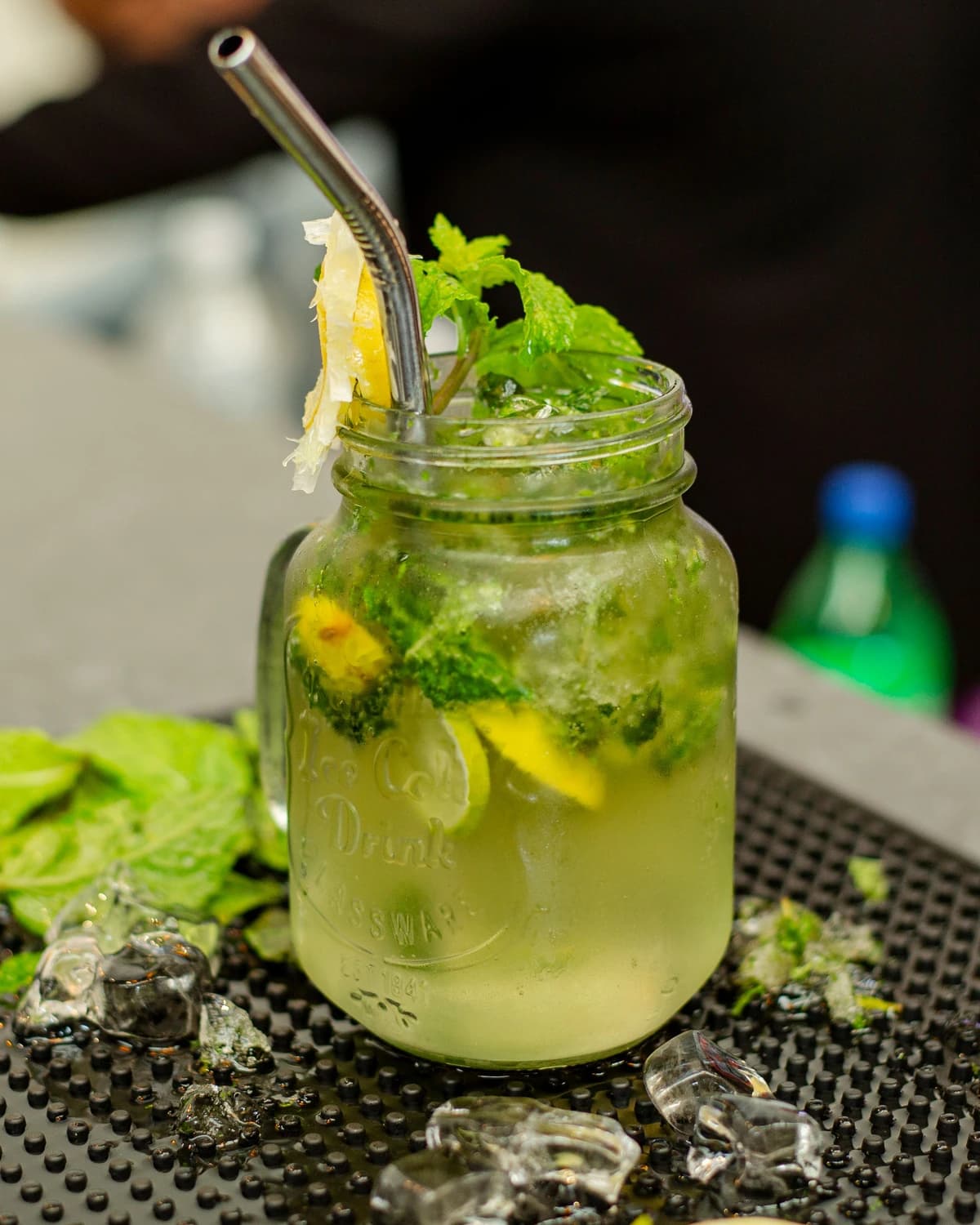
Virgin Mojito
You may like this because it's part of the same highball family as the Garden Highball.
- Lime Rickey
Lime Rickey
You may like this because it's part of the same highball family as the Garden Highball.
Questions people ask
- Why does my Garden Highball taste bitter?
- Almost always the cucumber skin, which turns bitter under pressure. Peel a couple of the slices before muddling and muddle gently — both are in the tips above, and "Tastes bitter" is the first troubleshooting entry.
- Do I need an alcohol-free botanical spirit, or can I leave it out?
- Leaving it out gives you cucumber-mint tonic, which is pleasant but much plainer. The botanical spirit supplies the juniper and root notes that make it read as a Gin and Tonic — which is the drink it is the alcohol-free counterpart to.
- The botanical flavour is too faint. What went wrong?
- Usually too much tonic rather than too little spirit. Alcohol-free spirits are lower in intensity than gin, so the same ratio tastes weaker — the troubleshooting section covers this under "Botanical flavour is too faint".
Use up your ingredients
Bought a bottle just for this? Here's what else it's good for.
Related tools
Scale this for a party
Work out bottles, mixers, ice and total alcohol units for any number of guests.
Recipe confidence
An original combination of well-understood components rather than a single fixed historical recipe.