Solvent, heat, surface and time
Infusions: putting flavour into spirits, syrups and water
How to infuse tea, coffee, spices, herbs, fruit and chilli into a spirit, syrup or water — what controls the speed and the bitterness, how to tell when it is done, and how to store it safely.
An infusion is the simplest advanced technique there is: something solid sits in a liquid until the liquid tastes of it, and then it comes out. Tea is an infusion. So is a cinnamon syrup, a chilli tequila and a jar of lemon peel in vodka.
It is also the technique most often done badly, because recipes give a single time — "leave for 48 hours" — as though every chilli, every tea and every kitchen were the same. They are not. What actually decides an infusion is four things: the liquid doing the extracting, the temperature, how much surface the ingredient presents, and how quickly it gives up the bitter, drying compounds you did not want. Once you know those, you can work out any infusion without a recipe, and you stop it at the right moment by tasting.
Safety first — read this before anything else on the page
- Fresh ingredients in a low-alcohol or alcohol-free liquid — fruit, herbs, ginger, anything in a syrup or water — belong in the fridge for the whole infusion, not on the counter. The Food Standards Agency's advice for chilled food is 5°C or below.
- Never infuse garlic, fresh herbs or chillies in oil at room temperature. Low-acid food kept airless in oil is the condition in which botulism bacteria can grow. This guide does not cover flavoured oils for that reason.
- A spirit at full strength is hostile to most microbes, but it does not make fresh fruit last for ever: strain the solids out when the infusion is done.
The liquid decides what comes out
Water, alcohol and fat dissolve different things. Water takes sugars, acids, colour and most of the bitter, drying tannins from tea and spices. Alcohol takes those and also the aromatic oils that water barely touches — the essential oils in citrus peel, the resins in spices, the volatile compounds in herbs. Fat takes a third group again, which is why fat washing is its own technique.
That is why a spirit infusion is faster and more aromatic than the same ingredient steeped in syrup, and why a spirit pulls more harshness out too. A stronger spirit extracts faster still: a 40% spirit is the practical choice at home, and the higher strengths bars use for tinctures extract the most and the quickest.
Sugar slows everything down. A syrup is a poorer solvent than water because the sugar is already occupying it, so syrup infusions are usually done warm, or made by infusing water first and dissolving the sugar into it afterwards.
Heat, surface and tannin
Heat speeds extraction of everything, wanted and unwanted. Hot water pulls a tea's aroma in minutes and its tannin soon after; cold water takes many hours to reach a similar strength and leaves more of the bitterness behind. For coffee the difference is even larger, which is why cold brew tastes rounder and less acidic than hot coffee left to cool.
Surface area is the other accelerator. Cracked cardamom gives up its flavour far faster than whole pods; sliced chilli faster than whole; ground coffee faster than beans. If an infusion is too slow, cut or crack the ingredient rather than leaving it longer — a long infusion has more time to pick up the harsh compounds that come out last.
Those harsh compounds are mostly tannins and bitter pith. Tea leaves, grape and apple skins, citrus pith, cinnamon bark and oak all release them, and they arrive later than the pleasant aroma. An infusion that tasted lovely at two hours and drying at six has not got stronger, it has got worse.
- Fast (minutes to an hour)
- Hot tea, chilli, fresh hot peppers, mint and basil in spirit, coffee in hot water. Taste every few minutes for tea, every 15–30 minutes for chilli.
- Medium (hours to a couple of days)
- Citrus peel, cracked spices, ginger, vanilla, most fruit in spirit, cold-brew tea. Taste every few hours.
- Slow (days)
- Dried fruit, nuts, roots and bark in spirit, cold-brew coffee in water (overnight to a day). Taste daily.
Worked example: tea, hot and cold
The Smoked Tea Old Fashioned and the Alcohol-Free Bamboo both use strong black tea as the backbone of an alcohol-free drink, for its grip as much as its flavour. Two tea bags in 200ml of just-boiled water for about four minutes gives a brew strong enough to stand in for an aged spirit's dryness. Leave it to eight minutes and it becomes harsh rather than stronger.
For a longer drink, cold brewing is gentler: the same tea in cold water in the fridge, tasted from about six hours and usually right by the next morning, gives a smoother, less astringent result that suits a highball or the Green Tea Swizzle's green tea. Green tea wants cooler water than black — hot rather than boiling — because it turns bitter faster.
Worked example: coffee
Cold-brew coffee, used in the Cold Brew Negroni and the Coffee Old Fashioned, is an infusion with a long time and a coarse grind. Coarse grounds in cold water at roughly one part coffee to five to eight parts water by weight, refrigerated, are ready somewhere between twelve and twenty-four hours; taste from twelve. Strain through a paper coffee filter.
It is a concentrate: rounder and lower in acidity than hot coffee, which is why it sits well beside Campari and vermouth. Hot espresso, as in the Espresso Martini, is the opposite approach — high heat and pressure for seconds — and gives the crema that builds that drink's foam. The two are not interchangeable, and the recipes say which they need.
Worked example: a spice in a spirit
For a cinnamon bourbon to use in an Old Fashioned variation, break one cinnamon stick into a few pieces and drop it into 200ml of bourbon in a clean jar. Taste after twelve hours and then twice a day. It is usually done in one to three days, and the sign it has gone too far is a dry, woody edge rather than a stronger cinnamon. Strain it, label it with the date and keep it like any opened spirit.
Chilli in tequila for a spicy Margarita is the same method on a much shorter clock. A sliced fresh chilli in 200ml of tequila can be hot enough in fifteen minutes and fierce in an hour. Taste every fifteen minutes; seeds and pith carry most of the heat, so leave them out for a gentler result.
Worked example: fruit
Fruit in a spirit — strawberries in gin, say — gives colour and fresh flavour within one to three days in the fridge. It goes wrong in two ways: the fruit turns soft and cooked-tasting if left too long, and the colour fades to brown in light. Strain it once it tastes right, keep the bottle dark and cold, and use it within weeks rather than months for the freshest flavour.
Fruit in syrup or water is a different product, closer to a cordial, and it is perishable: keep it in the fridge from the start and treat it as you would fresh juice.
Straining, oxidation and storage
Strain through a fine strainer first and then, for clarity, a paper coffee filter. Do not squeeze the solids; pressing pushes bitterness and fine sediment through.
Oxygen dulls an infusion over time, especially fruit and herb infusions, which go flat and brownish. Store in a full, small bottle rather than a half-empty large one, out of the light. A spirit infusion keeps like the spirit, but its fresh character fades over weeks; a syrup or water infusion is a perishable food and belongs in the fridge, used within days for anything fresh. Label everything with what it is and the date.
The short version
- The liquid decides what comes out: alcohol takes aromatic oils that water barely touches.
- Heat and surface area speed everything up, including the bitterness. Crack or slice rather than steep longer.
- Times are ranges. Taste as you go, and stop when it tastes right, not when a timer says so.
- Fresh ingredients in syrup or water infuse in the fridge and are perishable. No flavoured oils at room temperature.
Covered in more depth elsewhere
Try it on
Recipes where this matters most
Smoked Tea Old Fashioned
Lapsang souchong tea, a little sugar and orange oil over one large cube — the Old Fashioned's shape, smoky and tannic, without alcohol.
Alcohol-Free Bamboo
Alcohol-free vermouth, verjus and a little strong black tea, stirred and served up — short, dry and wine-like.
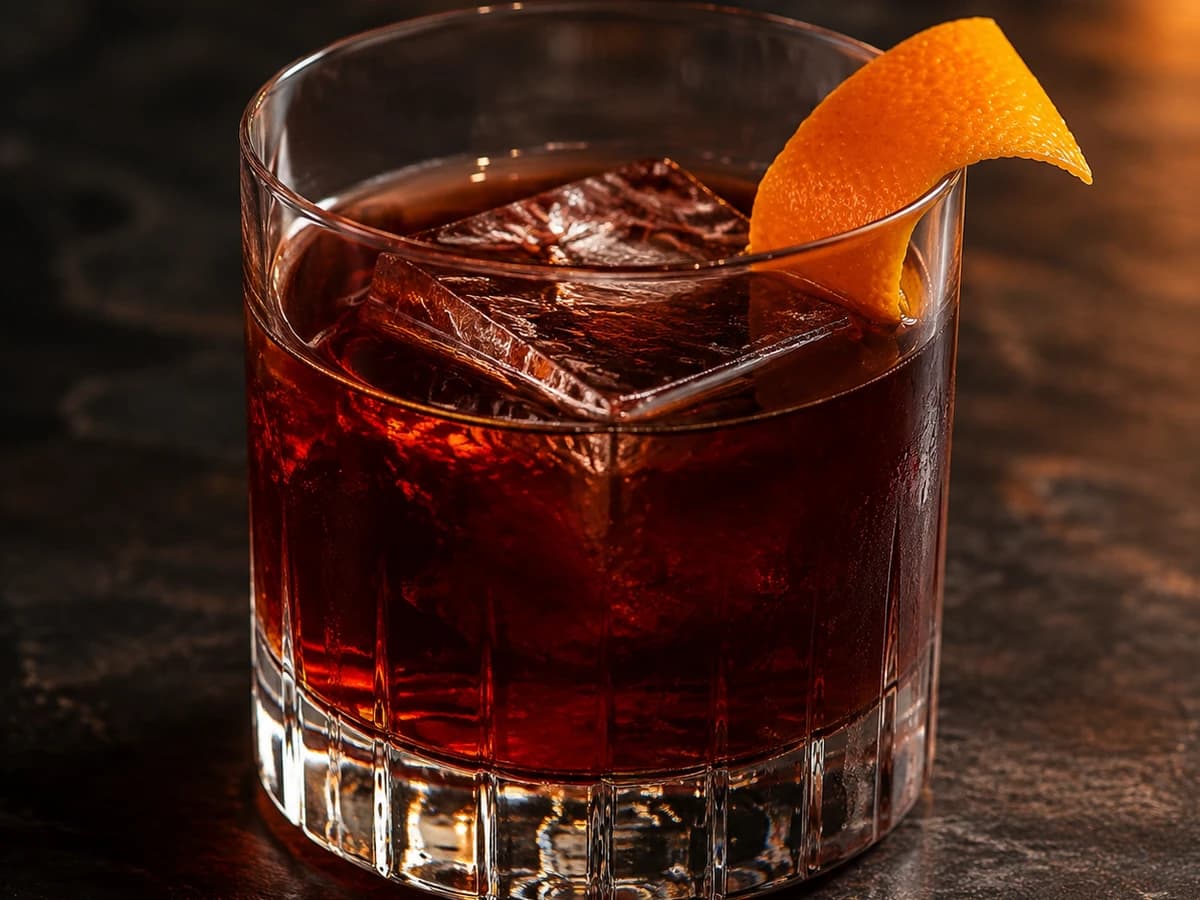
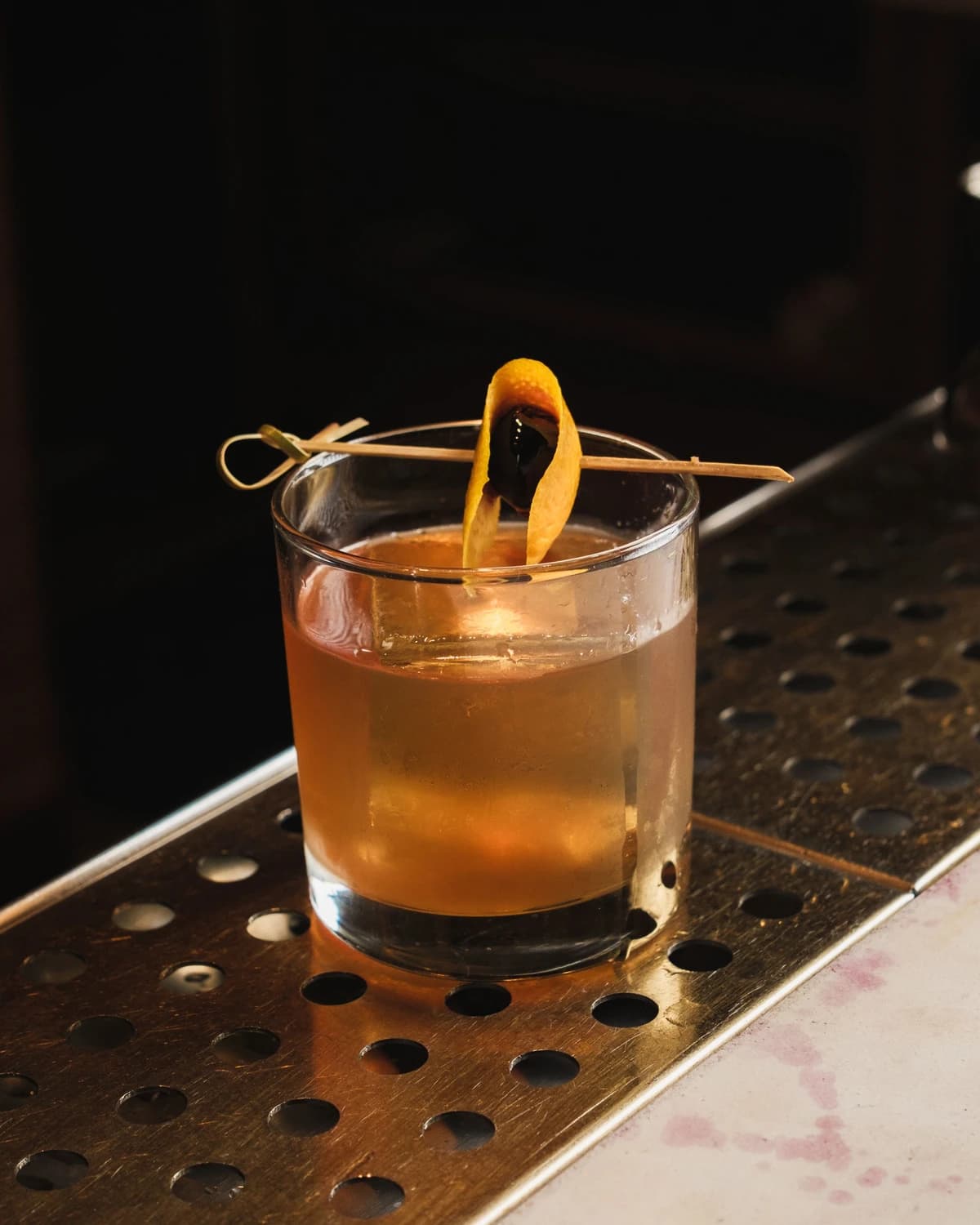
Coffee Old Fashioned
A classic Old Fashioned given a cold-brew twist — bourbon, coffee and bitters, stirred slow.
Keep reading
Related guides
How fat washing works, why it carries flavours an infusion cannot, a worked brown-butter bourbon for the Old Fashioned, and the chilling, straining, storage and allergen rules that make it safe.
What separates a syrup, a cordial, a shrub, a tincture and an oleo saccharum: what each is made in, how sweet and sour it is, how much goes in a drink and how long it keeps.
The three techniques that separate a serious home bar from a good one — what each actually does, when it is worth the effort, and when it is not.