Beyond shake and stir
Clarification, carbonation and fat washing
The three techniques that separate a serious home bar from a good one — what each actually does, when it is worth the effort, and when it is not.
Shaking, stirring and muddling cover almost everything. These three do not — they change a drink's texture, appearance or flavour in ways no amount of technique with a shaker can, which is why they turn up on modern menus and almost never at home.
All three are genuinely achievable in a domestic kitchen. Two of them are also frequently not worth doing, and this page says which.
Clarification: removing everything you cannot see through
Clarification strips the particles that make a citrus drink cloudy, leaving something transparent that still tastes of lime. It also changes texture — a clarified drink feels silkier and lighter — and it dramatically extends shelf life, which is the real reason bars do it: a clarified batch keeps for weeks.
The accessible method is milk clarification, and it is centuries old rather than modern. Warm milk is curdled by the drink's acid; the curds trap the particles and tannins; the whole thing is strained. It does not taste of milk, and the technique appears in eighteenth-century punch recipes long before anyone called it clarification.
The honest assessment: for a drink you are making now and drinking now, it is effort for an aesthetic gain. For a batch you want to keep, or for a clear drink where clarity is the whole idea, it earns its place.
Carbonation: forcing the bubbles in yourself
Carbonating a finished drink rather than topping it with soda gives a noticeably finer, more persistent bead, and lets you carbonate things soda cannot lengthen — a whole batched cocktail, for instance. A home carbonation machine or a soda siphon does the job.
The rules are unforgiving. The liquid must be very cold, because carbon dioxide dissolves far better at low temperatures. It must be low in sugar and particulates, since both cause foaming that vents your gas. And it must not contain anything that will froth violently, which rules out most citrus-heavy builds unless clarified first.
That last point is why clarification and carbonation show up together on menus: the first is often a prerequisite for the second.
Fat washing: putting flavour in and taking the fat out
Fat washing infuses a spirit with a fat-soluble flavour — browned butter, bacon fat, toasted sesame oil, coconut — and then removes the fat itself. Warm fat and spirit are combined, left to infuse, then frozen. The fat solidifies and is lifted or strained off, leaving the flavour behind and the spirit still clear.
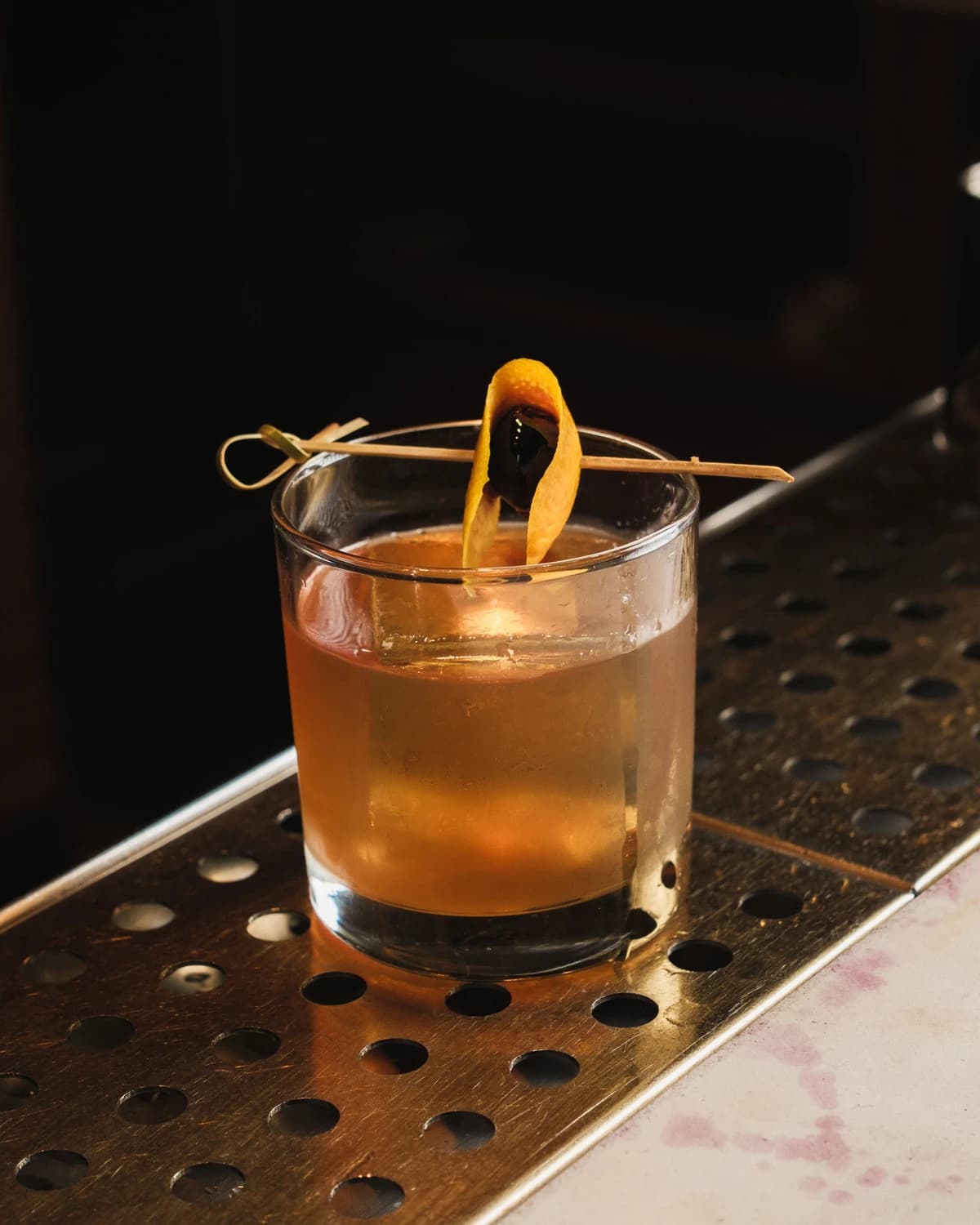
It works because many of the compounds we taste as rich and savoury are fat-soluble and simply will not transfer by any other method. It is also the technique most likely to genuinely surprise someone: a fat-washed bourbon Old Fashioned tastes like nothing else in the canon.
Practically: it takes a day, mostly unattended, and the freezing step is not optional — skipping it leaves an oily film that ruins the drink's texture and appearance.
- Clarification
- Worth it for batches, shelf life and drinks where clarity is the concept. Not worth it for a single drink you are about to drink.
- Carbonation
- Worth it for batched and pre-mixed drinks. Needs cold, low sugar, and few particulates — often clarification first.
- Fat washing
- The highest flavour return of the three, and the least fussy. A day of waiting rather than a day of work.
What these have in common
All three are batch techniques. None of them makes sense for one drink made to order, and all of them make sense for something you intend to make repeatedly or serve to a room — which is a useful filter for whether to bother.
They are also the point at which a home bar starts needing storage discipline. A clarified or fat-washed spirit is a perishable product: label it, date it, refrigerate what needs refrigerating, and taste before serving something made a month ago.
The short version
- Clarification removes particles for texture, clarity and — mainly — shelf life. Milk clarification is centuries old, not modern.
- Carbonation needs the liquid very cold, low in sugar and low in particulates; clarification is often the prerequisite.
- Fat washing transfers fat-soluble flavour then freezes the fat out. Best return for effort of the three.
- All three are batch techniques. For a single drink made to order, none of them is worth it.
Covered in more depth elsewhere
Try it on
Recipes where this matters most


Keep reading
Related guides
Shaking, stirring, muddling, straining, throwing and building — what each one does to a drink, and when the choice is genuinely load-bearing.
Water is an ingredient in almost every cocktail you have ever drunk. How much, where it comes from, and why cold matters as much as wet.
How to go from an idea to a drink worth making twice — starting from a template, changing one thing at a time, and knowing when to stop.