Flavour in, fat out
Fat washing: brown butter, coconut and how to do it safely
How fat washing works, why it carries flavours an infusion cannot, a worked brown-butter bourbon for the Old Fashioned, and the chilling, straining, storage and allergen rules that make it safe.
Fat washing flavours a spirit with a fat and then takes the fat away. Melted fat is stirred into a spirit, left to give up its flavour, then frozen solid and lifted off. What remains is a clear spirit that tastes of browned butter, toasted coconut or sesame, with a slightly rounder feel in the mouth.
It works because many of the flavours we call rich, nutty and savoury are carried by fat-soluble compounds. They pass from the fat into the spirit while the two are mixed, and stay there when the fat leaves. The technique looks theatrical but is mostly waiting.
Safety first — read this before anything else on the page
- The only time the spirit and fat spend at room temperature is the short mixing stage while the fat is still liquid — an hour or two at most. From then on, keep it in the freezer until it is strained, and the finished bottle in the fridge. Never store a fat-washed spirit at room temperature.
- Butter is milk. A butter-washed spirit must be treated as containing milk, however well it is strained, and declared as such to anyone you serve. Nut and sesame oils carry their allergens in the same way.
- This guide does not use meat fats. They work, but they add food-safety questions — the fat's own handling and storage — for a flavour few home drinks need.
Choosing a fat
Any fat that is liquid when warm and solid when frozen can be used, and the choice is the flavour. Browned butter gives toffee, nuts and baked notes that suit whisky and aged rum. Virgin coconut oil gives a gentle coconut that suits rum and tequila. Toasted sesame oil is powerful and needs very little. Neutral oils carry nothing and are pointless.
A fat that stays liquid in the freezer, such as olive oil, cannot be lifted off as a solid disc. It can be separated, but it needs patience and careful pouring, so it is not where to start.
- How much
- Published methods range widely. A common starting point is about 60–120g of a strong-flavoured fat per 750ml bottle, and up to twice that for a mild one such as butter. Start low: you can always wash a second time.
- Which spirit
- Aged spirits — bourbon, rye, aged rum, cognac — carry rich fat flavours best. A neutral vodka shows the fat most plainly, which is useful for learning.
The method
Melt the fat (and brown it, if that is the flavour), let it cool until warm but still liquid, then pour it into the spirit in a wide jar or freezer container with room to shake. Seal and shake or stir well.
Leave it to infuse for one to a few hours, shaking now and then. Longer adds little and the flavour is mostly in within the first hour or two. Then freeze it, ideally overnight, until the fat sets into a solid layer on top.
Break through the fat and lift it off, then strain the spirit through a fine strainer and a paper coffee filter while it is still very cold. The filter catches the last specks of fat; let it drip rather than pressing it.
Worked example: brown-butter bourbon for an Old Fashioned
Brown 60g of unsalted butter in a pan over medium heat, swirling, until it smells of hazelnuts and the solids at the bottom are deep golden — a few minutes, and it goes from brown to burnt quickly. Let it cool for five minutes, then pour it, solids and all, into 350ml of bourbon in a jar. Shake, leave at room temperature for no more than an hour or two while you shake it now and then, then freeze it overnight.
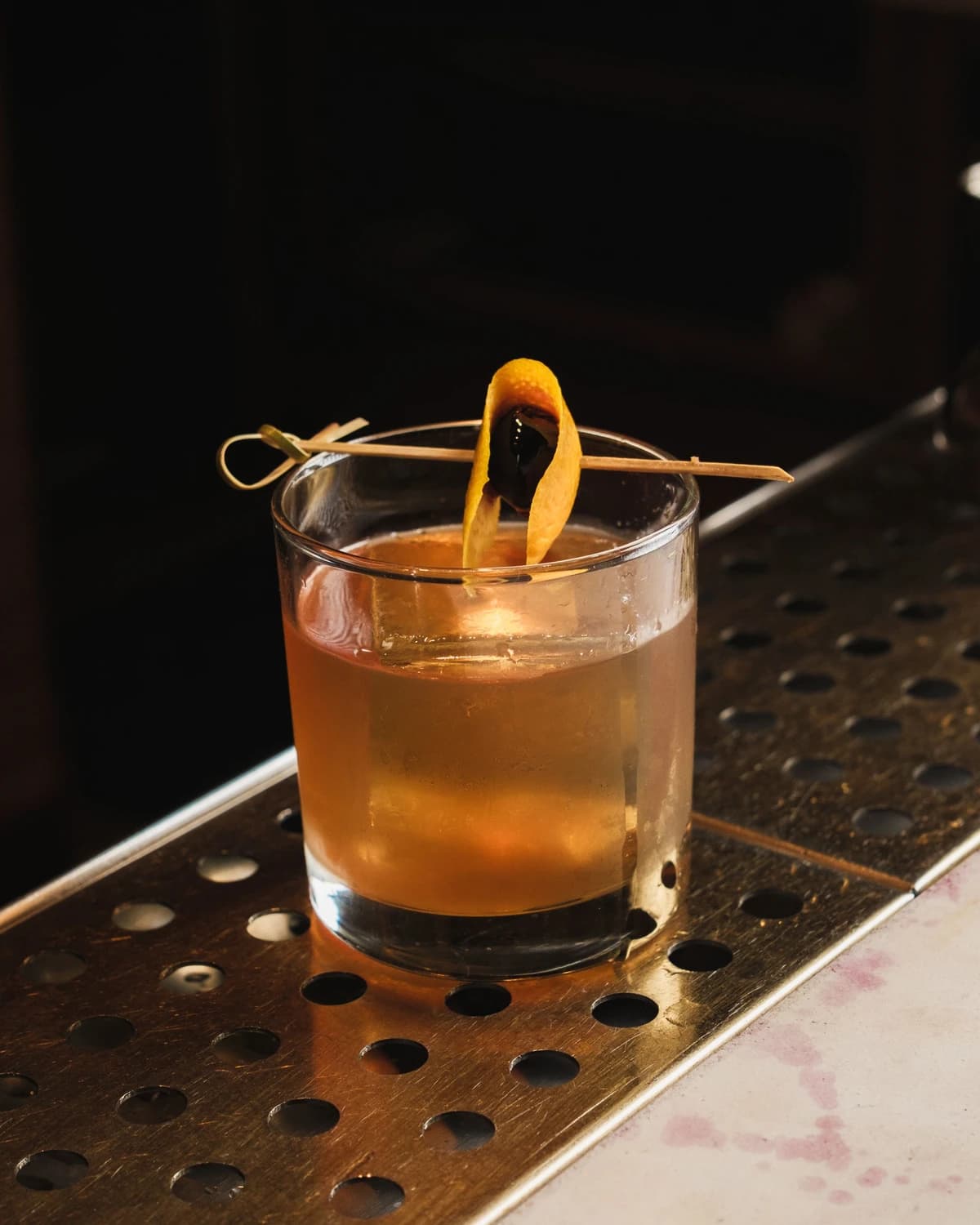
Next day, lift off the butter disc, strain the bourbon through a fine strainer and then a coffee filter, bottle it, label it with the date and a note that it contains milk, and keep it in the fridge. Use it in place of plain bourbon in an Old Fashioned. The sugar and bitters stay the same; the butter shows up as a toasted, round sweetness under the whisky.
If it tastes greasy, fat got through: freeze and filter it again. If it tastes faint, the butter was not browned far enough, or there was too little of it.
Storage
Keep it in the fridge and use it within a few weeks, tasting before you pour. Sources differ on how long a fat-washed spirit keeps, and there is no tested figure to give: the risk is the residual fat turning rancid, which you will smell and taste. If it smells stale or rancid, discard it.
The short version
- Fat-soluble flavours move into the spirit while the two are mixed; freezing lets you lift the fat out.
- Start with about 60–120g of fat per 750ml and an hour or two of contact, then freeze overnight.
- Strain cold, through a coffee filter. Greasy means filter again.
- Keep it cold throughout and in the fridge after. Butter-washed spirits contain milk; declare it.
Try it on
Recipes where this matters most

Keep reading
Related guides
How to infuse tea, coffee, spices, herbs, fruit and chilli into a spirit, syrup or water — what controls the speed and the bitterness, how to tell when it is done, and how to store it safely.
Why curdled milk clears a cloudy punch, the acid and the order that make it work, how to filter it, what you lose in yield, how long it keeps, and how to fix a punch that will not run clear.
The three techniques that separate a serious home bar from a good one — what each actually does, when it is worth the effort, and when it is not.