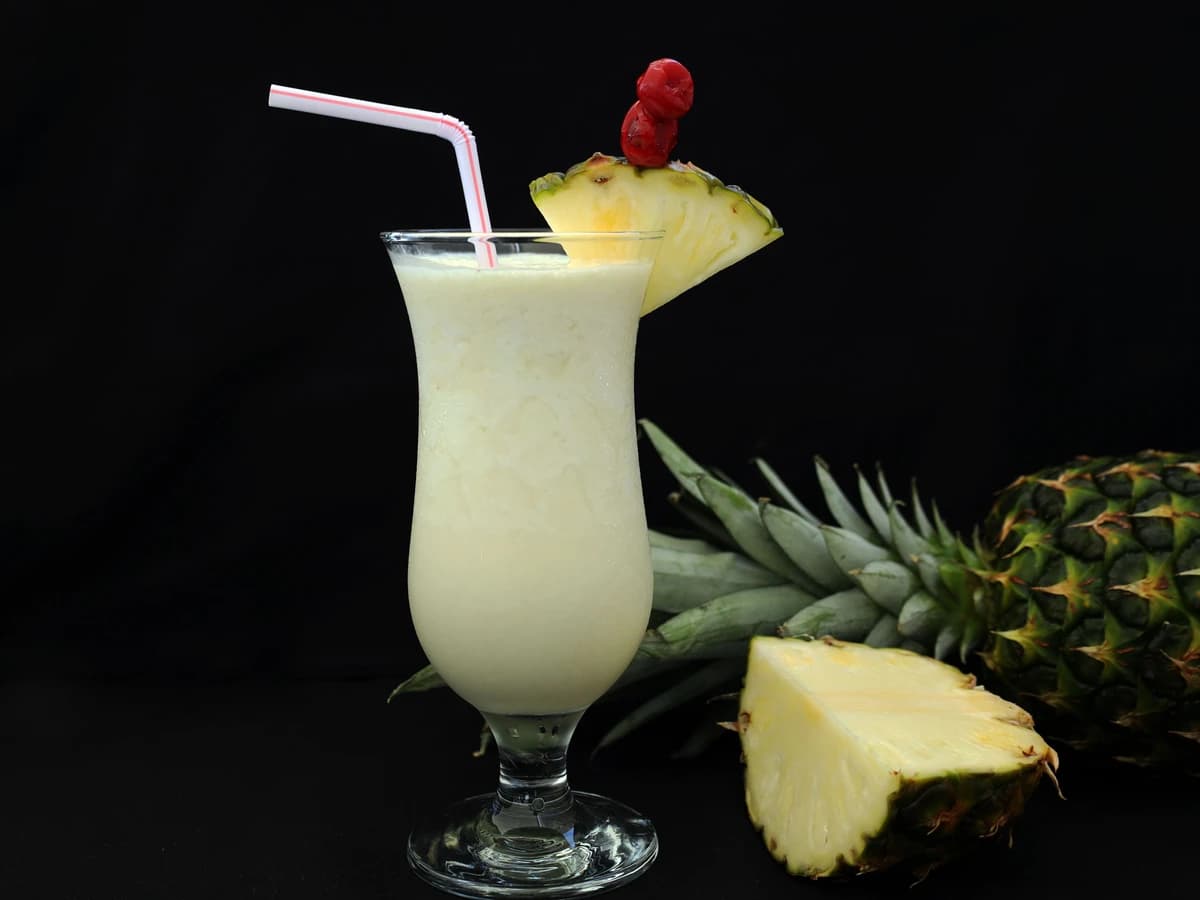
Virgin Piña Colada
Coconut cream, pineapple juice and cream blended with ice — a tropical classic without the rum.
- Difficulty
- easy
- Prep time
- 5 min
- Strength
- Alcohol-free
- Glassware
- Hurricane glass
- Base
- alcohol free
- Serves
- 1
Related drinks
Ingredients
- Coconut cream60ml
Shake the tin well before opening
- Pineapple juice120ml
- Double cream30ml
Garnish: Pineapple wedge, Maraschino cherry
Method
- Add the coconut cream, pineapple juice and cream to a blender.
- Add a generous cup of ice.
- Blend until smooth and thick, with no ice chunks remaining.
- Pour into a hurricane glass.
- Garnish with a pineapple wedge and a cherry.
Equipment
Don't have everything? Here's what works instead.
Blender
Household swap: A stick blender in a tall jug works, though the texture will be slightly less smooth.
Jigger
Household swap: A measuring cup or tablespoon measure.
Missing an ingredient?
Each swap below says what it changes and how to correct for it, so you can decide whether you are making this drink or a neighbouring one.
Instead of Pineapple Juice
Best substitute: Peach Purée
This is the lengthener in this drink.
Flavour impact: Rounder and less acidic, shifting the drink toward a peach-coconut colada.
What changes
Expect more sweetness and less acidity. Still a good drink, and a slightly different one.
- Sweetness ↑
- The drink will land sweeter, which also makes it read as less sharp and slightly heavier even though nothing else changed.
- Acidity ↓
- Less acidity is the change people notice most and diagnose least — the drink goes flat and slightly cloying rather than obviously wrong.
- Character
- you lose tropical, sweet-tart, juicy and fruity, and you gain sweet, stone fruit, lush and fragrant. Numbers can't see this: two ingredients can be identically sour and still smell nothing alike.
To correct for it
- Cut the syrup or sugar back — start by halving it and taste before adding any back.
- Add a little more of it, or a squeeze of fresh citrus, until the drink lifts again.
Moderate confidenceA recognised tropical variation, though it changes the flavour balance.Shifts the drinkBecomes a variation
Want to change something these swaps do not cover — too sweet, too thin, a herb you dislike? How to adjust any mocktail works by what each component does rather than by ingredient name.
Make it better
- Blend in short bursts rather than one long run — it stops the mixture separating and keeps the texture even.
- Shake the tinned coconut cream thoroughly before use; it separates in the can and needs recombining.
- Add the ice gradually and check the consistency as you go — too much at once makes it hard to blend smooth.
- Adjust sweetness gradually and taste as you go — it's easy to add more syrup, impossible to take it out.
Rescue this drink
- Too thick to drink through a straw
- Blend in a splash more pineapple juice to loosen it.
- Too thin or slushy
- Add more ice and blend again briefly.
- Mixture separates after a few minutes
- Make sure the coconut cream was fully recombined before blending — a partial mix separates faster.
- Too rich to finishgeneral guidance
- Cream and coconut flatten the palate rather than refreshing it, so a second one is always harder work than the first. A squeeze of lime or lemon cuts through more effectively than reducing the cream, which just makes it thinner without making it brighter. Serving it in a smaller glass is the other honest answer.
- Texture looks split or curdledgeneral guidance
- This usually happens when citrus is added too fast to dairy, or the drink sat too long before serving. Add citrus gradually while stirring next time — a split drink often can't be fully recovered once it happens.
- Too sweetgeneral guidance
- Add a small amount of fresh citrus juice or a dash of bitters to bring the balance back — adjust gradually and taste as you go.
- Too sourgeneral guidance
- Add a little more sweetener (simple syrup or the cocktail's usual sweetening ingredient), a small amount at a time.
- Served too warmgeneral guidance
- Chill the glass, ice and every ingredient ahead of time — a warm pour is the fastest way to lose a cold drink's balance. For one serving, there's no real fix beyond rebuilding it properly chilled; for a batch, keep everything refrigerated until the moment of serving and add ice last.
- Missing the garnishgeneral guidance
- No maraschino cherry? A pineapple leaf or extra pineapple wedge looks just as tropical without the cherry.
Make ahead & storage
Make to order
Make this one to order — the texture is made by the blender and collapses. You can still measure and group the ingredients in advance, which is most of the work.
- Coconut cream:
- Dairy separates when it sits with acid, and once split it cannot be stirred back.
- Double cream:
- Dairy separates when it sits with acid, and once split it cannot be stirred back.
What it tastes like
The taste, and what drives it
very sweet, gentle, very rich — a rich and creamy drink served blended, no separate ice.
Very sweet
Dry → Sweet
A sweet drink by design — the sugar is a feature, not a fault.
What drives it: Pineapple juice — carries the most sugar into the glass.
Gentle
Soft → Sharp
A trace of acidity, there to lift rather than to be noticed.
What drives it: Pineapple juice — supplies the acidity.
Very rich
Light → Rich
Very rich — this is closer to a dessert than to a refreshment.
What drives it: Coconut cream — adds most of the weight.
Moderate
Delicate → Bold
Moderate: assertive enough to hold its own, mild enough for a second.
What drives it: Coconut cream — is the most concentrated thing in the glass.
What you smell first
- Tropical fruitLeads
From Coconut cream, Pineapple juice
Every aroma here comes from the liquid itself; nothing is layered on top.
How it was worked out
Each reading comes from the recipe's own recorded taste scores combined with what each ingredient contributes, weighted by how much of it is in the glass. Almost everything in this drink has detailed ingredient data behind it.
How balance actually works →If it isn't right
What goes wrong with this drink, and why
Only the faults this particular recipe is actually prone to — each with the likely cause, the adjustment, and what the adjustment costs you.
It's too sweet
- Likely cause
- Pineapple juice is carrying the sugar here, and it is the easiest thing in the drink to over-pour — syrup clings to a jigger and a "splash" is rarely the same twice.
- What to change
- Cut pineapple juice by about a third and rebuild. If it is already made, a squeeze of citrus is faster than starting again.
- What that does
- It will taste drier and slightly thinner — sugar carries body as well as sweetness, so you lose a little weight along with it.
It tastes weak
- Likely cause
- With no alcohol to carry flavour and no heat to cut through, an alcohol-free drink has to work harder for the same presence — thinness here is almost never a measuring error.
- What to change
- Add acidity or bitterness rather than more fruit. Sweetness is what is usually already too high in a thin mocktail.
- What that does
- The drink gains definition without gaining sugar. It will also read as slightly sharper, which is what 'more presence' usually means in practice.
It's watery
- Likely cause
- Blending adds water while it chills, and the two cannot be separated. Wet ice from a freezer door, or small cubes, will over-dilute before the drink is properly cold.
- What to change
- Use bigger, drier, colder ice and stop sooner. Chilling the glass first buys you time you would otherwise spend diluting.
- What that does
- More flavour concentration at the same temperature. Under-dilute instead and the drink will taste harsh — this is a target, not a direction.
It doesn't smell of anything
- Likely cause
- This drink's aroma comes from tropical fruit, carried in the liquid. Serving it too cold suppresses that: volatile compounds do not leave a very cold drink.
- What to change
- Let it sit for a minute before drinking, and use a glass that narrows towards the rim to concentrate what does escape.
- What that does
- More of the aroma escapes and the drink reads as more intense. The cost is temperature: a drink left to warm also dilutes faster, so this is a trade against how long it stays right.
It tastes one-dimensional
- Likely cause
- With 3 components there is nowhere for complexity to hide — a rich and creamy drink is exposed by design, so a dull one is usually a dull ingredient rather than a missing step.
- What to change
- Change the quality of what is there before adding anything new: fresh citrus rather than bottled, a better base bottle, a dash of bitters. Bitters add layers at a scale nothing else matches.
- What that does
- More going on at the same strength and sweetness. Adding a whole extra ingredient instead usually produces a muddier drink rather than a deeper one.
Taste profile
- Sweetness
- 4/5
- Sourness
- 1/5
- Bitterness
- 0/5
- Strength
- 0/5
- Fruitiness
- 4/5
- Freshness
- 2/5
- Creaminess
- 5/5
- Smokiness
- 0/5
Nutrition & alcohol
Estimate onlyEstimated from standard coconut cream, pineapple juice and cream quantities; blended volume varies with ice used.- Calories
- 320 kcal
- Sugar
- 30 g
- Carbohydrates
- 34 g
- Alcohol units (UK)
- 0
- US standard drinks
- 0
- ABV
- 0%
- Serving size
- 300 ml
Show calculation assumptions
Source: Calculated from standard measures
Calorie breakdown: ~0 kcal from alcohol, ~320 kcal from sugar and mixers.
Likely range: 240–400 kcal, reflecting the confidence level above — not a lab-measured figure.
Assumes 60ml coconut cream, 120ml pineapple juice and 30ml double cream blended with roughly 150ml crushed ice.
These figures are estimates, not laboratory measurements — individual tolerance to alcohol varies. See our responsible drinking guidance.
Variations
Virgin Strawberry Colada
Blend a handful of fresh strawberries in with the other ingredients for a fruitier, pink-tinged version.
What kind of drink this is
The structure behind the recipe
A blended build: a rich and creamy alcohol-free drink, served blended, no separate ice — rich in the mouth.
Rich and creamy
Built around dairy or cream, so richness rather than acidity carries the drink.
Lengthener
Pineapple juice
Poured long — at this volume the juice is what makes the drink long, whatever else it brings.
Richness
Coconut cream
Dairy enriches and adds body.
Double cream
Dairy enriches and adds body.
3 components' roles areworked out from the ingredient's category and recorded taste attributes rather than set by hand — the reasoning is shown above so you can disagree with it.
Technique
blended
Ice is liquefied into the drink rather than chilling it from outside, so dilution is far higher and immediate.
A thick frozen body that reads as sweeter and less alcoholic than the same recipe served cold and liquid — cold and texture both suppress the perception of alcohol.
What it ruins: Anything delicate or spirit-forward. It also warms and separates quickly, so a blended drink is made to be drunk promptly.
Everything about blending →How the technique works →Dilution
During mixing, then strained
Water from ice typically makes up around 45% of the finished drink for a blended build (commonly 40–50%). Dilution is an ingredient here, not a side effect.
Why dilution is an ingredient →Served
Blended, no separate ice
Hurricane glass · 300ml
The ice is inside the drink rather than in the glass, so it warms and separates as it stands — this one is made to be drunk promptly.
Texture and aroma
Dairy gives weight and coats the palate, which rounds off sharp edges and mutes bitterness.
No dedicated aromatic component — what you smell is the spirit itself, which is a deliberate choice in a drink this spare.
Where to go from here
Each of these is here because of something specific about this drink, not as a standard set of links.
Drinking this with food: pudding, and afterwards
On its recorded taste scores this drink meets the test for pudding, and afterwards — the page explains the principle behind it rather than simply asserting the pairing.
Making alcohol-free drinks that stand up
Alcohol does structural work in a drink, and this one has to do those jobs another way. The alcohol-free path works through how.
Where it comes from
Origin and family
Origin of the Virgin Piña Colada
Alcohol-free adaptation of the Puerto Rican piña colada.
On drinks history
Cocktail origin stories are frequently repeated and rarely evidenced. Our history section separates what is documented from what is folklore rather than picking whichever version reads best.
History and culture →Try this next
- Virgin Painkiller
Virgin Painkiller
You may like this because it shares a tropical taste profile with the Virgin Piña Colada.
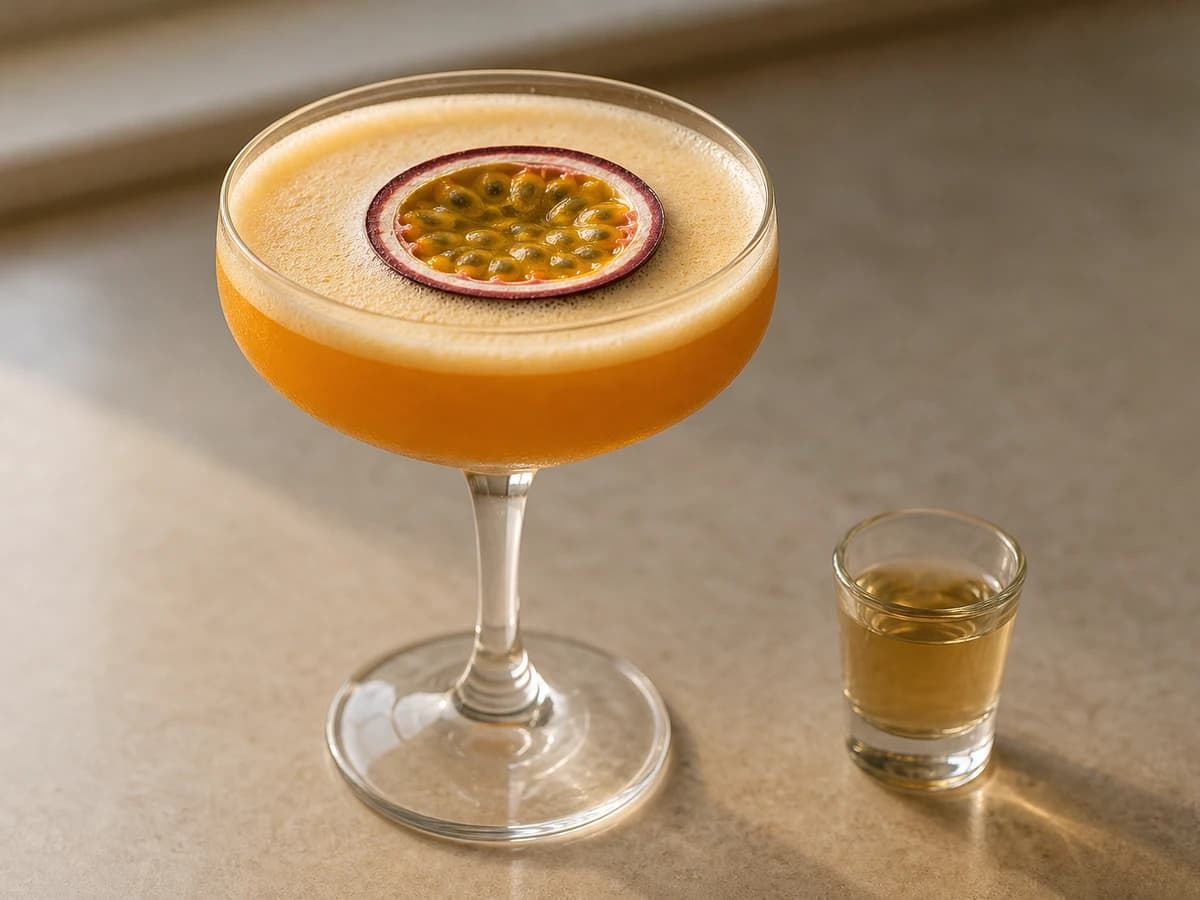
Alcohol-Free Passion Fruit Martini
You may like this because it shares a tropical taste profile with the Virgin Piña Colada.
- Alcohol-Free Irish Coffee
Alcohol-Free Irish Coffee
You may like this because it shares a creamy taste profile with the Virgin Piña Colada.
Questions people ask
- Coconut milk, coconut cream or cream of coconut — which one?
- Cream of coconut, which is the sweetened one. Coconut milk is far too thin and makes a watery drink; unsweetened coconut cream works if you add your own syrup, which gives you more control over the sweetness. See the substitutions above.
- Why does mine separate?
- Under-blending, or cold cream of coconut straight from the fridge. Let it come to room temperature so it emulsifies, and blend for longer than feels necessary — it should be completely smooth, not just combined.
- Is it very sweet without the rum?
- It can be, because rum's dryness was offsetting the pineapple and coconut. A squeeze of lime is the standard correction and it makes a substantial difference — see the tips above.
Use up your ingredients
Bought a bottle just for this? Here's what else it's good for.
Related tools
Scale this for a party
Work out bottles, mixers, ice and total alcohol units for any number of guests.
Recipe confidence
A direct, well-established adaptation of a documented classic.