Tannin as structure
Tea-based mocktails
Why tea is the most underrated alcohol-free base there is, and how to brew it so it works in a cold drink.
Tea gives an alcohol-free drink the one thing fruit juice cannot: tannin. Tannin is astringent — it dries the mouth — and that drying sensation is structurally the closest thing available to what alcohol's finish actually does. A drink built on tea tastes like it has a backbone.
It is also cheap, keeps in the fridge, and comes in enough varieties to cover most of the flavour space a spirit would.
Brewing for cold drinks
Tea for a cold drink should be brewed stronger than tea for drinking hot, because ice will dilute it by a third or more. Brew at roughly one and a half times your normal strength, then chill fully before it goes anywhere near a glass.
Do not over-steep to get strength. Past about four minutes, black tea releases tannins faster than flavour and turns harshly astringent — the fix is more leaf, not more time.
Cold-brewing is the alternative worth knowing: leaves steeped in cold water for six to twelve hours in the fridge give a smoother, far less astringent result, because tannin extracts poorly at low temperatures. It suits green tea especially.
Which tea for which drink
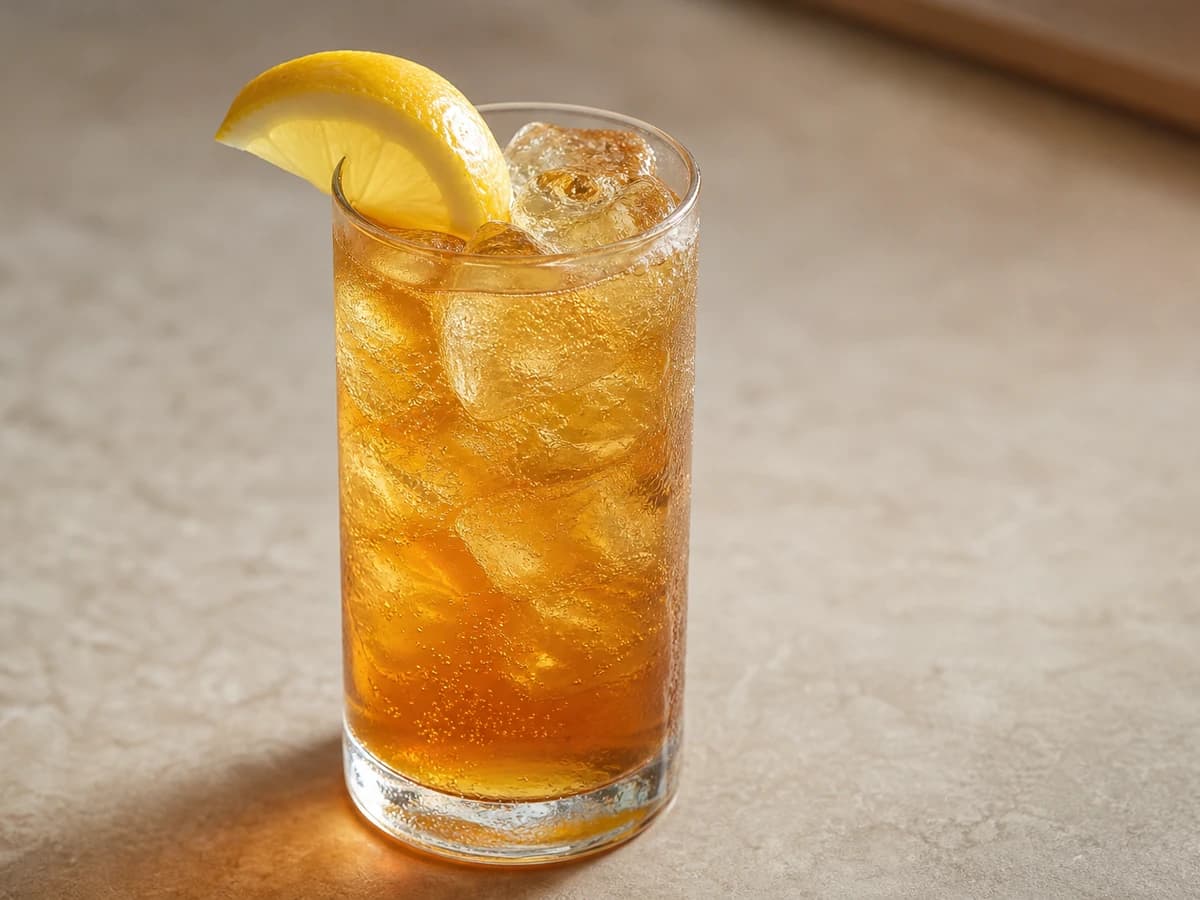
Strong black tea is the workhorse — enough tannin and body to anchor a long drink, and enough neutrality to take citrus and sugar. It is what makes an Arnold Palmer work.
Green tea is lighter and more vegetal, and pairs with cucumber, mint and elderflower rather than with heavy fruit. Hibiscus, though not technically tea, gives sharp acidity and a deep red colour that makes it useful where you want a drink to look like it contains something.
Smoked teas such as lapsang souchong are the one genuine route to smokiness without mezcal or peated whisky, and a very small amount goes a long way.
Sweetening and keeping
Tea and sugar interact awkwardly. Sweetness suppresses the perception of astringency, so a sweetened tea drink loses the structural advantage you brewed the tea for in the first place. Sweeten late, taste as you go, and stop earlier than feels right.
Brewed tea also does not keep as well as people assume. Refrigerated, it holds for two or three days before it starts tasting stale and flat; past a week it develops a distinctly musty edge. Cold-brewed tea keeps slightly longer because it extracts fewer of the compounds that oxidise.
If you make tea-based drinks regularly, brewing a strong batch every few days and keeping it in a sealed bottle in the fridge is the single change that makes them practical rather than a project. It is the same logic as keeping syrup made in advance.
The short version
- Tannin dries the finish, which is the closest available substitute for alcohol's structure.
- Brew about 1.5× normal strength for cold drinks, and chill fully before building.
- More leaf, not more time — over-steeping produces astringency, not strength.
- Cold-brewing gives a smoother result, especially with green tea.
See it in practice
Recipes that use this
Keep reading
Related guides
The flavour people miss most when they stop drinking, and the five alcohol-free ingredients that genuinely supply it.
Espresso and cold brew in alcohol-free drinks — bitterness, texture and the caffeine question nobody mentions.
What alcohol actually contributes to a drink, what disappears when you take it out, and the five things you can use to replace it.