Pre-Hispanic onward
Agave: tequila, mezcal and the plant underneath both
What tequila and mezcal actually are, why agave spirits are slower to make than any other category, and which parts of the popular story are marketing.
Agave spirits are unusual in that the raw material takes the better part of a decade to grow and is destroyed to harvest it. That single fact shapes everything about the category — its economics, its vulnerability to fashion, and why cheap tequila is cheap.
It is also a category with an unusual amount of invented folklore attached, most of it recent and most of it commercial.
The plant sets the terms
Blue agave takes roughly six to eight years to reach maturity, and longer at altitude. It is a monocarpic plant — it flowers once and dies — so harvesting means cutting the whole plant and removing the leaves to get at the piña, the starchy heart.
That heart is roasted or steamed to convert its complex sugars into fermentable ones, then crushed, fermented and distilled. The roasting method is the single biggest stylistic decision: traditional brick ovens or earthen pits give a rounder, smokier result than industrial autoclaves.
The economics follow directly. A surge in demand cannot be met for the better part of a decade, which is why agave prices swing violently and why shortcuts appear at the cheap end of the market during booms.
Tequila and mezcal are not opposites
Mezcal is the broad category: a spirit distilled from agave. Tequila is a specific, protected subset of it — blue agave only, produced within a defined region, under a denomination of origin established in 1974.
The popular framing of 'mezcal is the smoky one' is a production artefact rather than a definition. Much mezcal is roasted in earthen pits over wood, which imparts smoke; most tequila is not. Neither is smoky by nature.
The label detail that matters most is whether a tequila says 100% agave. Products that do not may legally contain up to 49% other sugars, and that difference is far more consequential to what ends up in your glass than any question of ageing or brand.
The worm, and other recent inventions
The larva in some mezcal bottles is not traditional, is not a quality marker, and has nothing to do with agave spirits' history. It appears to be a mid-twentieth-century marketing device, and it is generally regarded within Mexico as an export gimmick rather than a practice.
Similarly, the ritual of salt and lime around tequila is a serving convention rather than a tradition with deep roots, and a good 100% agave tequila is designed to be sipped rather than survived.
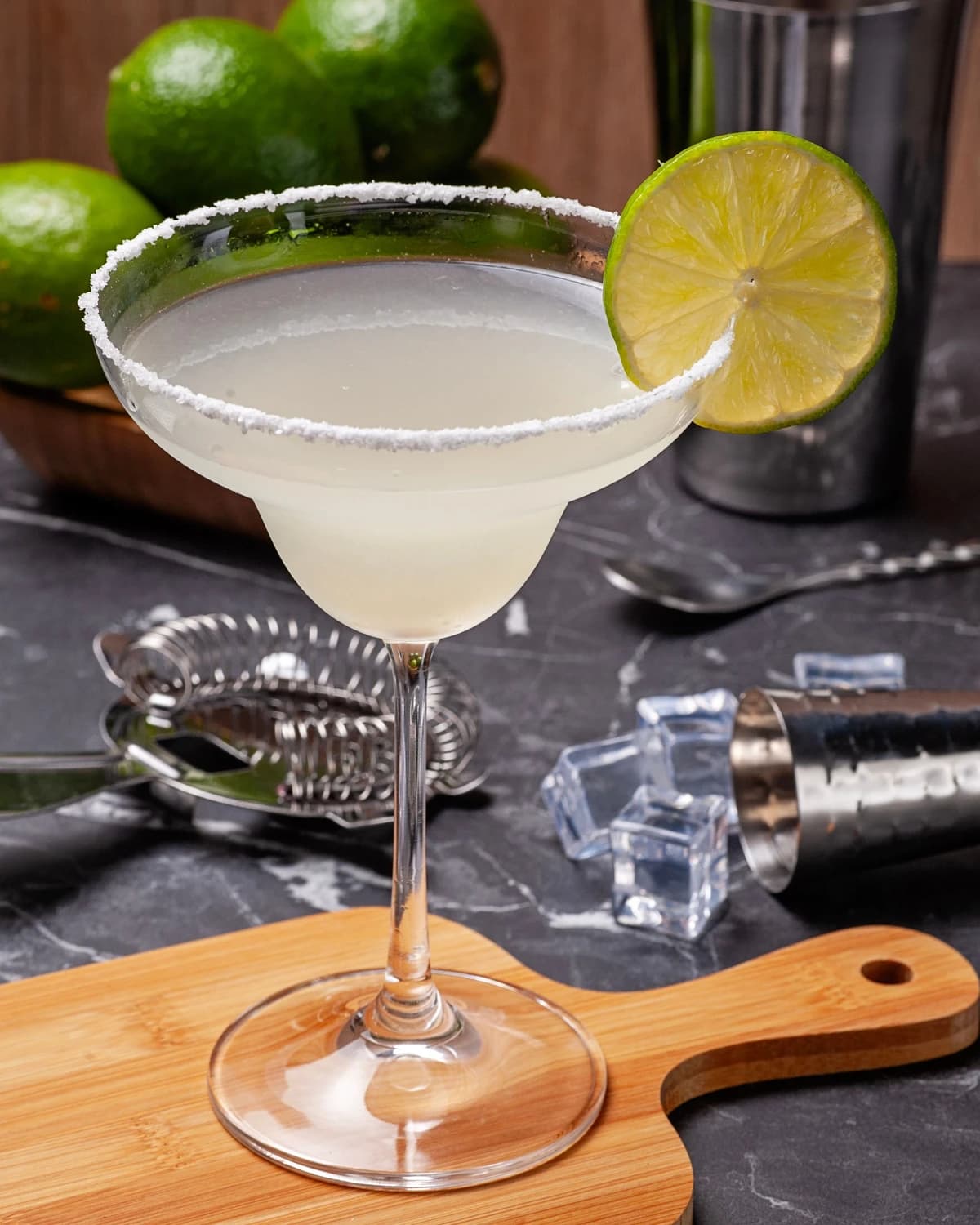
The Margarita's origin, meanwhile, has several competing claimants and no settled account — the same pattern as most twentieth-century drinks, and CocktailHQ does not pick between them.
Show your working
What's actually established, and what isn't
Every claim on this page, with how well the evidence supports it.
- documented
Blue agave takes roughly six to eight years to mature and is destroyed at harvest.
Standard agronomy for the plant, and the basis of the industry's published supply cycles.
Supported by contemporary printed sources — a dated book, menu, newspaper or legal record.
- documented
Tequila has held a Mexican denomination of origin since 1974, restricting it to blue agave from defined regions.
A published regulatory instrument with a date.
Supported by contemporary printed sources — a dated book, menu, newspaper or legal record.
- documented
Tequila is a subset of mezcal; mezcal is the broader agave-spirit category.
A definitional relationship set out in the respective Mexican standards.
Supported by contemporary printed sources — a dated book, menu, newspaper or legal record.
- documented
Tequila not labelled '100% agave' may legally contain up to 49% other sugars.
Set out in the Mexican official standard for tequila.
Supported by contemporary printed sources — a dated book, menu, newspaper or legal record.
- documented
Mezcal's smokiness comes from pit-roasting agave over wood, not from the agave itself.
A direct consequence of a documented production method; tequila roasted in ovens or autoclaves does not develop it.
Supported by contemporary printed sources — a dated book, menu, newspaper or legal record.
- widely-reported
The larva in some mezcal bottles is a mid-twentieth-century marketing addition, not a tradition.
Consistently reported in drinks writing and by Mexican producers, and absent from earlier accounts of the spirit. Dating the exact commercial origin is harder than establishing that it is recent.
Consistently repeated across reputable modern drinks writing, but without a contemporary source we can point to.
- disputed
The Margarita was invented by a specific named person at a specific place.
Several competing claimants, none decisively evidenced. The drink's popularisation is far better documented than its invention.
Two or more serious accounts contradict each other, and the disagreement has never been settled.
The short version
- Agave takes six to eight years to grow and dies at harvest — that fact drives the whole category's economics.
- Tequila is a protected subset of mezcal, not its opposite.
- '100% agave' on a label is the single most consequential thing to check.
- The worm is a marketing device from the last century, not a tradition.
Drink the history
Recipes from this period
Keep reading
Related history
Where rum actually comes from, why Jamaican and Cuban rum taste nothing alike, and the history the category is built on.
How the classics came back, what the revival got right, and the habits it introduced that are worth leaving behind.
Where tropical drinks actually came from, why the Mai Tai's authorship has never been settled, and the part of the story that is not about drinks at all.